

April is Autism Awareness Month: Celebrating All Children and Supporting Growth
Every April, we recognize Autism Awareness Month—a time to increase understanding, promote acceptance, and celebrate the unique strengths of all children, including those with Autism Spectrum Disorder (ASD). At Flourishing Lives, we believe in fostering an inclusive community where every child, whether neurotypical or neurodiverse, can learn, grow, and thrive in a supportive environment.

Understanding the Diverse Needs of Children
Children experience the world in different ways, and every child has their own strengths, challenges, and ways of processing sensory information.
For example, children with autism often have sensory processing differences, social communication challenges, or a preference for routine. These differences can present challenges, but they’re also what makes each child special.
Autism is just one example of the many ways children experience the world differently. Recognizing and embracing these individual needs allows for a more inclusive, supportive, and understanding environment where all children can flourish.
Embracing Every Child’s Potential
Autism Awareness Month is not just about increasing knowledge—it’s about promoting acceptance, inclusion, and respect for all children. By understanding the diverse ways children experience the world, including those with autism, we create a more inclusive and supportive environment where all children can thrive and reach their full potential.

Join Us in Celebrating All Children
Whether you’re a parent, educator, or community member, you can help by:
- Learning more about the diverse needs of children, including those with autism
- Supporting inclusion in schools, activities, and social settings
- Celebrating strengths and encouraging children to express themselves in their own way
At Flourishing Lives, we’re here to support families and provide resources that empower all children. If you have any questions, we’d love to connect with you! Give our clinic a call today.
Supporting Your Child’s Sensory and Communication Development
We all explore the world through our senses, such as touch, sound, movement, or sight. However, some kids face challenges in processing this sensory input, which can significantly impact their attention, behavior, and more. Fortunately, the team at Flourishing Lives offers several ways to help your child thrive!
Understanding Sensory Difficulties:
Sensory processing refers to how the brain interprets and responds to sights, sounds, textures, movement, and other stimuli. Some children process this input in ways that make daily tasks more challenging, although what that looks like can vary:
- Overly Sensitive: Some kids become overwhelmed by sensory input, such as loud sounds, bright lights, or unexpected touches. These children might avoid certain textures, resist hugs, or struggle in noisy environments.
- Under Responsive: Some children do not register sensory input as easily and will seek out loud sounds, bright lights, or constant movement.
- Mixed Sensory Responses: Some children may be sensitive in some areas and less responsive in others. For example, they may dislike the feeling of socks but enjoy spinning in circles.
No matter your child’s sensory needs, our team can help them process and respond to their environment in a way that feels more comfortable.
How We Can Help
We offer child-led, play-based techniques to help children regulate their sensory responses and improve communication skills. The goal is to make interactions, learning, and socializing more manageable. Here are some examples:
- Sensory integration therapy gradually exposes kids to different sensations in a controlled setting to help them adapt.
- Deep-pressure activities, such as weighted blankets, compression clothing, or firm hugs, can help create a calming effect.
- Proprioceptive exercises encourage jumping, pushing, or climbing to improve body awareness and coordination.
- Tactile play engages children in hands-on activities like sand, water, or textured materials to increase comfort with different sensations.
- Social communication strategies help children understand nonverbal cues, take turns in conversation, and build confidence in interactions.
Our therapists create individualized plans based on your child’s strengths and challenges, helping them engage with their environment in a way that supports their development and confidence.

Signs Your Child May Benefit from Therapy
Does your child struggle with any of the following? They might benefit from working with us!
- Frequently covers ears, avoids certain textures, or resists grooming activities
- Appears clumsy, uncoordinated, or struggles with fine motor tasks like holding a pencil
- Has difficulty following multi-step directions or understanding spoken language
- Uses limited speech, has trouble expressing needs, or repeats phrases without clear communication
- Experiences frequent meltdowns or has trouble regulating emotions
- Avoids eye contact, struggles with turn-taking, or finds social situations challenging
- Tends to fidget or has trouble sitting still for activities
Helping Children Thrive at Flourishing Lives
Sensory and communication challenges can make everyday life more difficult, but with the right support, kids can build the skills they need to feel comfortable and confident. Reach out to us to learn more about how we can help your child succeed.

Patient Spotlight: Oliver
We are excited to share Oliver’s incredible progress on his therapeutic journey. Over the past few months, he has shown tremendous growth—not only in therapy but also at home. We’re incredibly proud of the strides he has taken.
In therapy, Oliver has made significant progress in engaging with dynamic courses and demonstrating increased perseverance and focus when faced with more challenging tasks. His interest in social participation has also grown, with notable improvements in taking turns, making eye contact, and interacting with others. Additionally, his frustration tolerance has improved, and the duration of his frustration has decreased.
Oliver has also carried over important social skills outside of therapy. For example, during a family bowling night, he practiced turn-taking, which supported his social development while he enjoyed quality time with his family.
We are incredibly proud of Oliver’s progress and look forward to seeing even more growth as he continues on his journey. His perseverance, positive attitude, and engagement in therapy have made a meaningful impact.
Oliver’s mom shared that when she first stepped into Flourishing Lives several years ago, she never imagined he would be where he is today. We want to celebrate all the therapists who have supported Oliver along the way— as well as his family’s ongoing dedication.
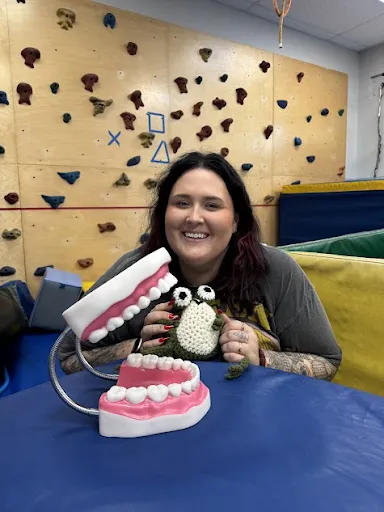
Staff Spotlight: Tara
We’re excited to introduce Tara, one of our amazing speech-language pathologists! Tara earned her Master’s degree in Speech-Language Pathology from Eastern Michigan University in 2019. Since then, she has been helping children and adults improve their communication skills in various settings, including schools, private practices, and home health.
Tara has experience working with many different speech and language challenges, but her greatest passion is helping people who stutter. She loves empowering them to find their voice and build self-advocacy skills, a focus she brings to every patient. She also believes that speech therapy should be fun. Whether she’s incorporating games, humor, or play, Tara makes sure that every child feels engaged, supported, and excited to grow their communication skills.
When she’s not in the clinic, Tara enjoys spending time outdoors, especially during Michigan’s warm summers. You’ll often find her paddleboarding, hiking, camping, or just soaking up the sunshine. She also has a creative side—she loves experimenting with makeup and even has a dedicated makeup room at home! Traveling is another big passion, and she’s working her way through a long list of dream destinations, one trip at a time.
At home in St. Clair Shores, Tara lives with her partner, Alex, and their two adorable dogs, Harper and Quinn. She’s thrilled to be part of the team and looks forward to helping everyone grow in their communication journey!
Helping Families Thrive

Activity of the Month: Springtime Sensory Play
Springtime is officially here, and Easter is just around the corner! Make the most of the season with these fun sensory play activities.
- Spring Garden Sensory Bin: Create a miniature garden in a large plastic bin. Fill it with soil, flowers, grass, leaves, and toy gardening tools. Encourage your child to cultivate their garden!
- Easter Sensory Bin: Fill a bin with Easter grass, plastic eggs, pom-poms, and small spring-themed toys. Let kids dig, hide, and discover objects.
- Spring Playdough Fun: Gather Playdough in different pastel colors, such as lavender, pale pink, or spring green. Add a few drops of corresponding scented extracts, such as lemon, mint, or lavender, and provide Easter-themed cookie cutters for fun, seasonal play.
- April Showers Rainstick Sensory Bottle: Fill an empty water bottle with blue-colored sand, dyed rice, and a bit of glitter, creating a rainstick that offers both visual and auditory input.
- Easter Egg Hunt: The classic Easter egg hunt is a great sensory activity in and of itself. Hide plastic eggs around the house or yard, making sure each one is filled with a small sensory treasure, such as a bright-colored toy, silk flower, or favorite candy.

Recipe of the Month: Easter Egg Cereal Treats
Original Recipe From: The Pioneer Woman
Ingredients:
- Cooking spray
- 1 10-ounce package of mini marshmallows (about 6 cups)
- 4 Tbsp. salted butter
- Food coloring (4 different colors)
- 6 cups crispy rice cereal
Directions:
- Coat a 9-by-5-inch loaf pan with cooking spray and line with 2 strips of parchment paper (perpendicular and overlapping), leaving an overhang. Spray the parchment with cooking spray.
- Put 1½ cups mini marshmallows and 1 tablespoon butter in a medium microwave-safe bowl. Microwave until the marshmallows are puffed and the butter is melted (about 1 minute). Stir until completely smooth. You may need to microwave for 30 more seconds.
- Tint the melted marshmallow with your first color, stirring to combine. Add 1½ cups cereal and stir until well coated.
- Spray your hands or a rubber spatula with cooking spray and press the mixture into the loaf pan in an even layer.
- Repeat steps 2-4 three more times, tinting each batch a different color and pressing the cereal mixture into the pan in layers.
- Once all the layers are complete, press the mixture down in the loaf pan to make it compact. Refrigerate until very firm, about 20 minutes.
- Lift the cereal treat loaf out of the pan using the overhanging parchment and remove the parchment. Cut the loaf crosswise into ¾- to 1-inch-thick slices. Then, using a 3- to 4-inch egg-shaped cutter, cut 1 egg diagonally from each slice.

Flourishing Lives Clinical Director Sheena Patel, MOT, OTRL, will speak at the conference.
JOIN OUR THRIVE COMMUNITY!
Tools for healing, resilience, inspiration, value, and education.
Are you looking for expert guidance, a supportive network, and resources to help your family or community thrive? We’re excited to introduce the Thrive Community, a membership for our current patients and community partners that offers ongoing support, education, and connection!
WHAT’S INCLUDED?
- Weekly Office Hours: Join live Google Meet calls to ask your questions and get answers from our experts directly.
COMING SOON…
- 24/7 Access to our Library. Access frequently answered questions anytime.
- Exclusive Content: Access resources, articles, and tips for growth.
- Supportive Community: Connect, share stories, and gain perspectives.
WHY JOIN THE THRIVE COMMUNITY?
- Get expert advice from experienced professionals.
- Empower your journey with tools to build inspiration and resilience.
- Stay connected and supported, even outside of regular therapy sessions.
1:1 Therapeutic Consultation
At Flourishing Lives, our therapeutic consultation program helps parents and family members actively engage and understand their child’s therapy journey.
Our daytime therapeutic consultative service gives parents a private space to discuss treatment options, manage everyday challenges, and actively support their child’s progress. Scheduled while your child is at school, these sessions allow for open, candid conversations without distractions. You’ll gain practical strategies to foster a positive and supportive environment at home and within the community.
Highlights
- Personalized guidance
- Ongoing support
- Feel empowered
- Increased involvement
- Reduce anxiety
- Gain more tools for success
Getting started is easy! Contact us to schedule your consultation for a smooth, supportive experience.
- 1 session for $180
- 4 sessions for $520