
Happy National Speech-Language-Hearing Month!
May isn’t just for sunny days and blooming flowers! It’s also National Speech-Language-Hearing Month, and the Flourishing Lives team is celebrating by raising awareness about the many ways kids can communicate and how speech therapy can support their growth.
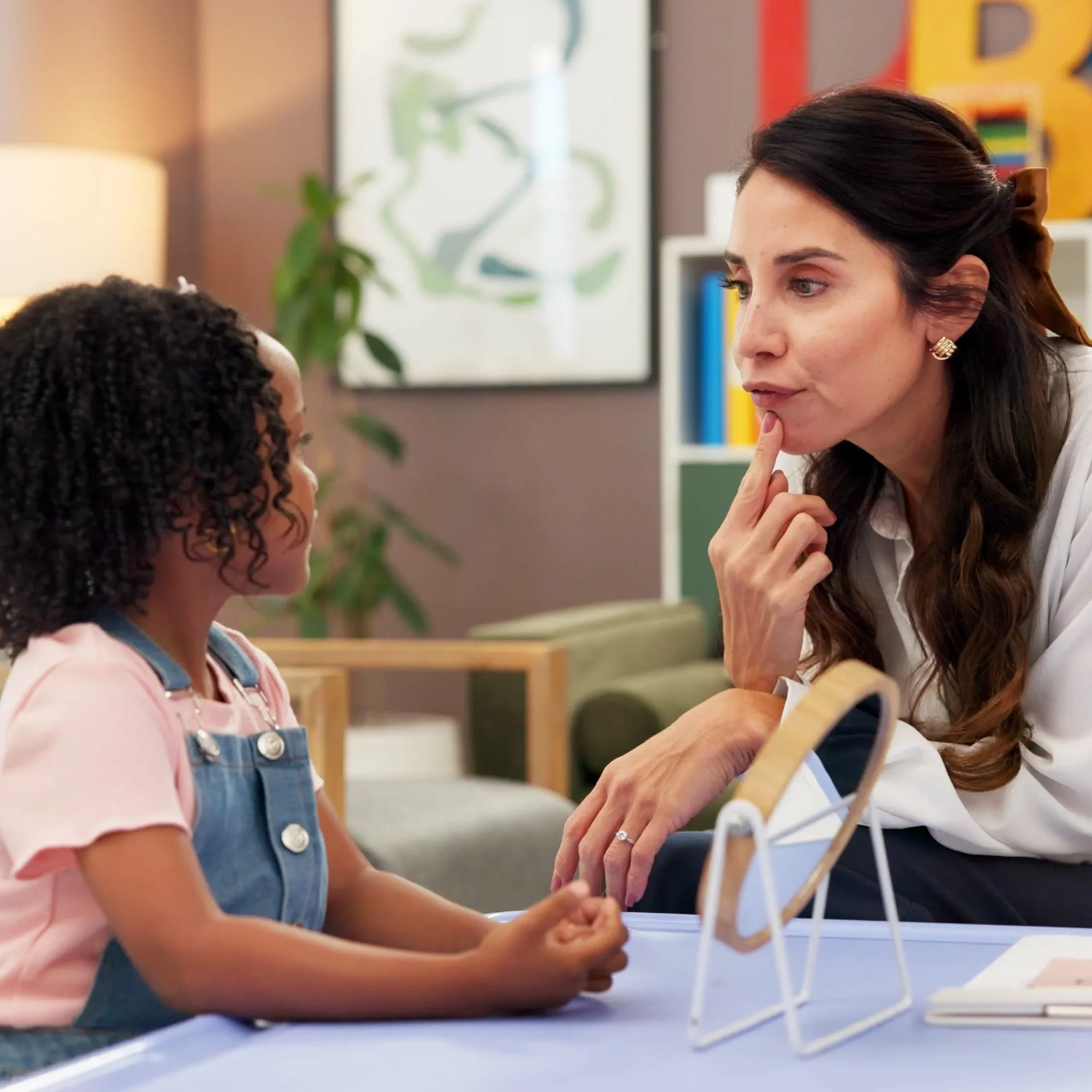
Many people assume speech therapy focuses on helping kids talk more clearly or improve their speech patterns. In reality, speech therapy focuses on all aspects of communication, not just speech.
At its core, communication is how children connect with friends and loved ones, express their needs, and participate in daily life. But for some children, this skill doesn’t come easily. Unfortunately, these difficulties often show up in ways that can be misunderstood.
Why Communication Is More Than Talking
Think about the last time you had a lively conversation. Speech might have been part of it, but other elements came into play, too, such as gestures, facial expressions, body language, and more.
This is as true for kids as it is for adults. And sometimes, kids with communication challenges may forego words entirely when trying to express themselves. For example, they may:
- Pull you toward the fridge instead of asking for a snack
- Avoid eye contact when overwhelmed
- Express their frustration through behavior, such as having a meltdown.
These are all forms of communication. Unfortunately, many adults are quick to label these actions as “misbehavior” when the actual issue is a breakdown in communication.
When Behavior Is Really Communication
There are some moments when a child isn’t trying to be difficult. They’re actually just trying to communicate the best way their skills allow at that moment. For example:
- A child has a meltdown when they can’t express what they need.
- A child can’t understand directions and seems “defiant” when they don’t follow them.
- A child withdraws from social situations because engaging feels too difficult.
- A child acts impulsively when they can’t process language quickly enough.
When children have limited ways to express themselves, their frustration can increase, affecting emotional regulation, attention, and participation in everyday activities. By shifting our perspective from “behavior problem” to “communication challenge,” we can respond more supportively and effectively. And this is where speech therapy shines!
How Speech Therapy Boosts All Aspects of Communication
Speech therapy focuses on building functional communication skills that help children participate more fully in their daily lives. This includes much more than producing sounds or words.
Skills We Work on in the Clinic
1. Understanding Language
Children learn how to follow directions, process questions, and make sense of what others are saying. Our therapists support this by using clear language, visual support, and repetition to help information feel easier to understand and use.
2. Expressing Needs and Ideas
We’ll help kids learn how to request help, share thoughts, and describe their experiences. Therapists build these skills by expanding language, offering choices, and creating natural opportunities for communication during play.
3. Social Communication
Social communication is all about back-and-forth interactions, such as taking turns and staying engaged with others. Through play-based activities, children practice reading social cues and participating in interactions in ways that feel comfortable and meaningful.
4. Supporting Regulation Through Communication
When children can express their needs, they’re better able to stay calm and organized. We teach simple, functional language and pair it with calming strategies and predictable routines to support regulation and reduce overwhelm.
5. Alternative Ways to Communicate
Some children benefit from using tools in addition to or instead of spoken words to express themselves. In those cases, we may introduce picture systems, signs, or communication devices to give children a clear and reliable way to share their needs and ideas.
How You Can Help At Home
One of the most important things to understand is that communication develops through everyday interactions. Simple changes can make a big difference:
- Pause and give your child time to respond
- Use short, clear phrases
- Follow your child’s lead during play
- Acknowledge all attempts to communicate, even nonverbal ones
Reach Out To Learn More
At Flourishing Lives, we look at communication as part of the bigger picture. By supporting both sensory regulation and communication skills, we help children feel more confident, connected, and successful in their daily routines.
If your child is having difficulty expressing themselves, understanding language, or engaging with others, take some time this National Speech-Language-Hearing Month to give us a call. Schedule an appointment today to learn how we can support your child’s growth.
We’re Hiring: Join Our Speech and Occupational Therapy Team!
Flourishing Lives is growing, and we’re looking for passionate occupational therapists, certified OT assistants, speech-language pathologists, SLP fellows, and mental health professionals to join our team! If you value connection, play-based learning, and helping children feel confident in their communication, we’d love to meet you.
Our unique approach includes:
- Play-based, child-led sessions that build trust and engagement
- Sensory-informed strategies to support attention and regulation
- Strong collaboration with families and other team members
- Focus on functional communication in real-life situations
If you’re looking for a supportive, team-oriented environment where you can make a meaningful impact, we encourage you to apply today.
More Ways to Be Heard: Supporting Communication with AAC
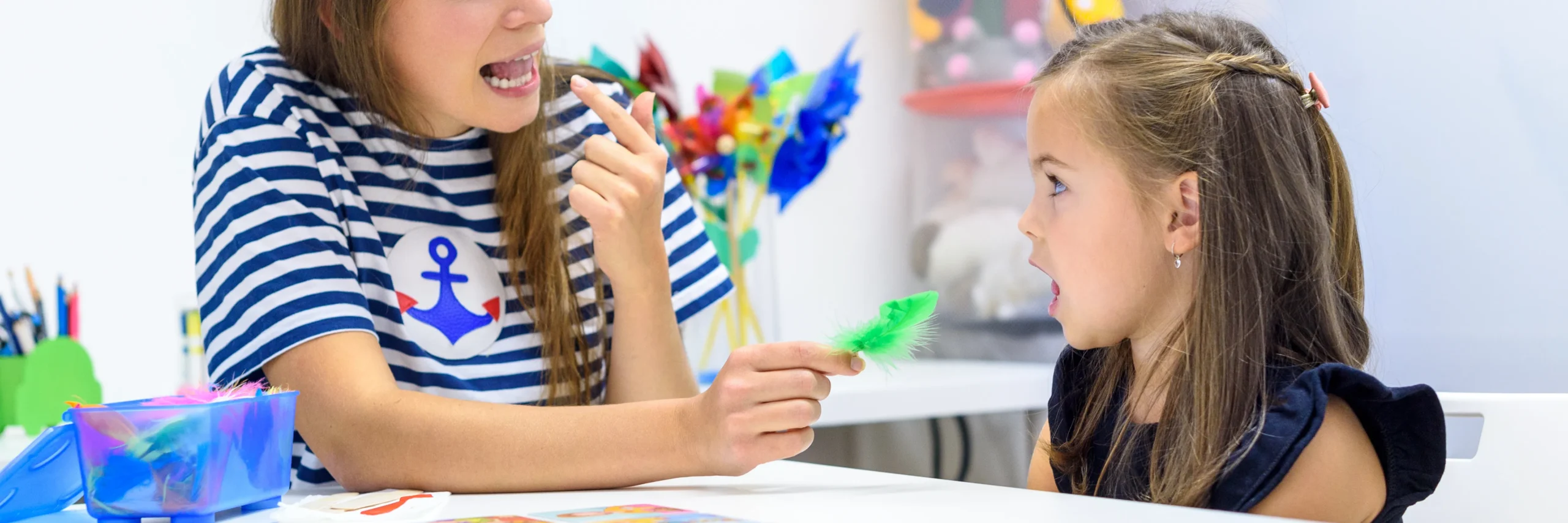
As we explored above, communication is a lot more than speech, and sometimes, kids benefit from tools or strategies that support or replace spoken words. Augmentative and alternative communication (AAC) tools can provide that support, giving kids a clear way to express their needs, thoughts, and feelings when speech is difficult or inconsistent.
Examples of AAC (And How They Help)
There are many AAC methods available, so their use will look different for every child. At Flourishing Lives, our goal is to match the method to what helps each child communicate most effectively. Here are some examples:
Visual Supports
Children use visuals to request items or activities. For example, they might point to an image of a crayon on a picture board to indicate that they would like to draw. This approach builds understanding that communication has a clear purpose.
Sign Language
Simple hand signs give children a quick way to express basic needs. Signs also support motor planning, which is the brain’s ability to plan and carry out movements.
Speech-Generating Devices
These devices produce words or phrases when a child presses a button or symbol. They can help children form sentences and participate in conversations.
Core Word Boards
These boards include commonly used words such as “go,” “help,” and “more.” They allow children to communicate across many situations.
Every Child Deserves to Be Understood
AAC can open the door to stronger communication, connection, and confidence. This is especially true when the methods are integrated into daily life. If you’re curious whether AAC could support your child, schedule an appointment at Flourishing Lives. Our team can help you find the right AAC tools for your child’s needs and provide guidance on using them effectively.
Patient Spotlight:
Mia
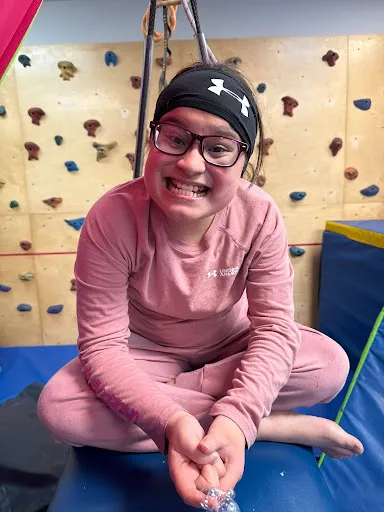
This month, we are excited to highlight one of our incredible clients and the meaningful progress she has been making in her communication skills.
Mia has been expanding beyond one-word utterances and is now using more purposeful phrases and sentences to express herself. Her confidence in communication has significantly increased, along with her overall engagement with communication partners. We’ve also seen great growth in her ability to ask and answer questions, as well as advocate for her wants, needs, and feelings.
It has been truly exciting to see her gain her voice and begin to use it more independently and consistently. Her dedication and hard work continue to shine, and we are so proud of all the progress she is making!

Staff Spotlight:
Giulia Chirco
We’re thrilled to spotlight Giulia, one of our compassionate Speech-Language Pathologists! She joined the Flourishing Lives team as a clinical fellow in October 2025. Giulia’s journey began at Butler University, where she earned her BA in Speech, Language, and Hearing Sciences, and continued at Calvin University, where she completed her MA in Speech-Language Pathology.
Giulia has hands-on experience across school, outpatient, and hospital settings, working with both children and adults—but her heart is in pediatrics and play-based learning. She’s passionate about supporting children with language disorders, phonological and articulation disorders, and fostering neurodivergent-affirming practices. Giulia loves meeting kids and families where they are to encourage meaningful, individualized growth.
When she’s not in sessions, you might find Giulia exploring the outdoors, staying active, baking, or enjoying time with family and friends. With creativity and care at the core of her work, she helps every person she works with communicate confidently and meaningfully.
Helping Families Thrive
Activities of the Month:
Springtime Play for Stronger Communication
Spring offers lots of natural opportunities to build communication through play. These simple, hands-on activities help children express themselves, understand language, and stay engaged.
Play Pretend: Running a Flower Shop
Set up a springtime flower shop using either real or silk flowers. Encourage your child to pretend to be either the shop’s owner or a customer to support back-and-forth interactions and to learn how communication works in real situations.
Tips for Building Skills
- Practice requesting: “I want the red flower.”
- Offer choices: “Do you want big or small?”
- Model short phrases and expand what your child says
Backyard I Spy
Head outside and play a few rounds of I Spy using spring items like bugs, leaves, or birds. This is a great way to build vocabulary and help kids connect words to what they see in the world around them.
Tips for Building Skills
- Use descriptive words: “I see something green.”
- Encourage guessing and turn-taking
- Give your child plenty of time to respond
Blow Bubbles
Blowing and popping bubbles is actually a great way to encourage communication, as it provides opportunities for kids to make requests and take turns. The activity also supports breath control and coordination, which are important for speech development.
Tips for Building Skills
- Pause before blowing to prompt a request from your child (“More!” or “Go!”)
- Take turns blowing and chasing bubbles
- Use simple phrases like “Ready, set, go!” before blowing the bubbles

Recipe of the Month:
Rainbow Gelatin Cubes

Ingredients:
- 4 packages (3 ounces each) of assorted flavored gelatin (choose a blend of different colors for the rainbow effect), divided
- 6 envelopes unflavored gelatin, divided
- 5 ¾ cups boiling water, divided
- 1 can (14 ounces) sweetened condensed milk
- ¼ cup cold water
Directions:
- In a small bowl, combine 1 package of flavored gelatin and 1 envelope unflavored gelatin. Stir in 1 cup boiling water until dissolved. Pour mixture into a 13×9 dish coated with cooking spray. Refrigerate until set but not firm, about 20 minutes.
- In a bowl, combine condensed milk and 1 cup boiling water. In another bowl, sprinkle 2 envelopes of unflavored gelatin over cold water and let stand for 1 minute. Stir in ¾ cup boiling water. Add to milk mixture.
- Spoon 1 cup creamy gelatin mixture over the first flavored gelatin layer. Refrigerate until set but not firm, about 25 minutes.
- Repeat steps 1-3 twice, alternating the flavored gelatin with creamy gelatin layers. Chill each layer until set but not firm before spooning the next layer on top.
- The final layer should be a flavored gelatin layer. Refrigerate at least 1 hour after completing the last layer before cutting into 1-inch squares.
Feel confident at the table again—without the power struggles
Mealtimes don’t have to be this hard
- You’re doing everything you can—cutting food just right, offering all the favorites, reading every tip online.
- And still, your child refuses to eat. Or cries. Or gags. Or throws their plate.
- You’re not failing. You’re just missing the right support.
- “Let’s change that”