


How to Create the Right Holiday Environment for Kids with SPD
The holidays are almost upon us! While the holidays are a time of joy, laughter, and time spent with friends and family, they can also be challenging for kids with sensory processing disorders. Bright lights, loud music, unfamiliar situations–all can make it difficult for your child to have a positive experience.
For many parents, one of the biggest challenges is navigating family celebrations. While there are several strategies you and your child can use to help them manage their sensory sensitivities, those strategies may become difficult when you’re attending big family gatherings or sleeping over at Grandma’s house. Today, the team at Flourishing Lives wants to share tips on ensuring your child has a sensory-friendly environment no matter where you’re celebrating. And remember, if you’d ever like more personalized guidance, just schedule an appointment with our pediatric therapists!
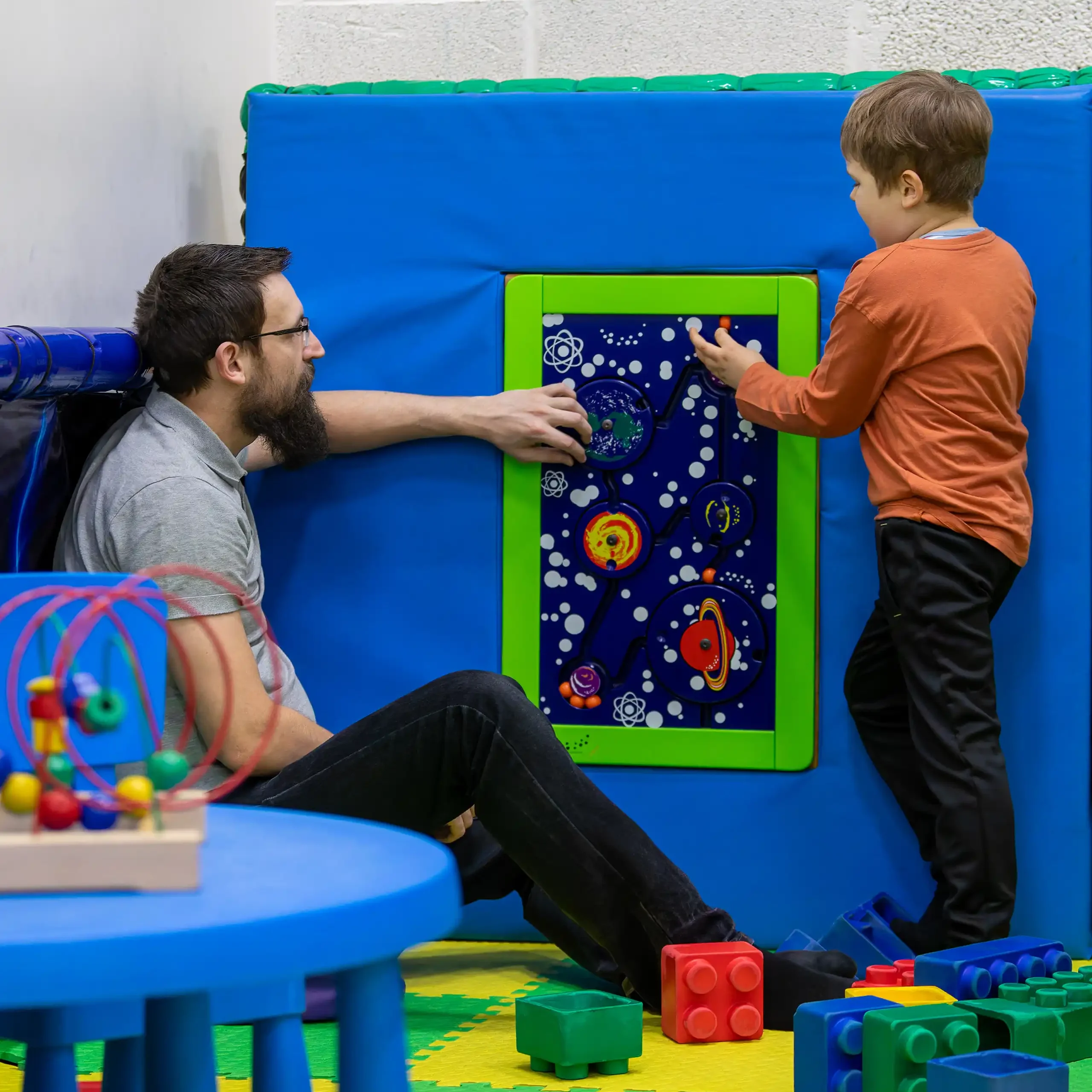
The Importance of Planning Ahead
The first step in ensuring a sensory-friendly holiday for your child is to start preparing early. Here’s what we suggest:
Let your child know what to expect.
Before the holidays are in full swing, sit down with your child to create a holiday schedule so they know what the season brings. Include any family gatherings, other parties, and holiday-specific activities. Encourage your child to share any concerns, and create a list of familiar items to help them feel more comfortable.
Let your family know what to expect, too.
Well before you attend any gatherings, take the time to talk to the host about your child’s needs. Gently explain what sensory processing disorder is and how it affects your child (since all children experience it differently). We also suggest providing a list of potential triggers.
If Your Child Struggles with Overstimulation
- Ask the host if they can set aside a quiet room where your child can go to get away from the crowd.
- Make sure other guests know your child may need some quiet time and ask them to respect those boundaries.
- Let family members know if hugs are okay (and not to be offended if they aren’t).
If Your Child Struggles with Understimulation
Be sure other guests understand the situation as well and can provide your child with the grace to manage their triggers. Remind them that your child isn’t misbehaving–they’re managing their SPD.
Let the hosts know about your child’s situation and ensure there’s a place where your child can perform any exercises or other activities that can help them manage their sensory sensitivities.
What About Meals?
Big dinners are often a source of stress for kids with SPD. They’re loud, crowded, and usually filled with unfamiliar foods. Before attending a dinner, find out what the hosts plan on serving so you can know if any safe foods will be available. If not, bring some of your child’s favorites to avoid trouble at the dinner table.
How to Handle the Big Day
While preparation is essential to a happy holiday season, there are also some steps you can take during the event to ensure everything runs smoothly:
- Remind hosts and guests about your child’s needs. If any boundaries are crossed, advocate for your child.
- Check with your child throughout the event to learn how they’re feeling. Encourage them to use quiet spaces, fidget toys, or other coping strategies.
- Take breaks with your child if they need them. For example, if your child is really struggling, you might go for a walk around the block.
- Don’t be afraid to leave early if needed. Be flexible in your plans and adjust depending on your child’s needs.
- Be sure to thank any hosts or guests who respect your child’s accommodations. Let them know their efforts are appreciated.
Have a Wonderful Holiday Season
The team at Flourishing Lives hopes our patients have a happy holiday season this year. Remember, we’re always available to help you and your child navigate any difficulties. Schedule an appointment with us today to get started!
Meet Ashley Prusinski, Office and HR Manager at Flourishing Lives
Ashley serves as the Office and HR Manager at Flourishing Lives, where she has worked since 2015. Her passion for helping others blossomed in childhood, inspired by her close bond with her grandmother and a friend who had a traumatic brain injury. Growing up in Metro Detroit, Ashley developed a deep appreciation for the Great Lakes, which has only grown stronger over the years.
In her free time, Ashley loves to spend time with her family, especially her two young children. She also enjoys traveling, with a special fondness for destinations near lakes and oceans, where she can indulge in her love for the water. Fun fact: Ashley was born on Thanksgiving, and it has always been her favorite holiday.

Patient Spotlight: Moses
When Moses started his journey at Flourishing Lives, he demonstrated challenges with motor planning and adaptability which directly impacted his self-esteem and confidence. Additionally, this led to him having a difficult time making lasting friendships or even engaging appropriately with peers at school or within the community.
In the beginning, Moses demonstrated challenges with developing new activities and ideas on what to play, resulting in Moses seeking the same activities each session. This is because he felt safe and confident with the success of something he already knew he could do. His team of therapists would provide Moses with the just right challenge to help him learn new ways to expand his play themes and build up his confidence which then led to him being able to initiate playing with other peers. By reaching small, achievable goals throughout each round of therapy, Moses made progress to the overall, larger goals that the family desired to see improvements on. Flourishing Lives uses the play method to help develop the skills that Moses needed for his success. After a year of hard work at Flourishing Lives, Moses made significant strides in self-confidence, self-advocacy, motor planning, and social participation.
Helping Families Thrive
Have You Considered Scheduling a Daytime Therapy Appointment?
Many of our patients and their families opt for evening appointments. However, once three o’clock hits, the Flourishing Lives office can become crowded and busy, which can be extremely overwhelming for many kids. However, daytime appointments offer several great benefits for the entire family. Here are three reasons you might consider scheduling your child’s next appointment during the day:
1. The clinic is less crowded.
Mornings and early afternoons are some of our least crowded appointment times. This is great news for kids who might find busy social environments overwhelming or anxiety-inducing. A quieter clinic is perfect for kids with sensory challenges and provides a less intense space for children to work on their social skills.
2. Daytime sessions work better with the school day.
It may seem counterintuitive, but daytime sessions can help your kid thrive in class.
- A morning session helps prepare your child for their day, allowing them to practice any necessary skills before the bell rings.
- A lunchtime session gives them a break from school activities–and a boost for afternoon classes.
- An afternoon session can help bridge the gap between school and extracurriculars.
Another benefit of daytime sessions? It allows your child to tackle the challenges of therapy when their energy levels are higher, which minimizes both mental and physical fatigue.
3. Daytime sessions keep your evenings low-key.
Evening sessions often leave families feeling rushed and stressed out, with limited time for dinner and relaxing before bed. Scheduling your child’s therapy sessions during the day frees up the evenings so the entire family can unwind and spend time together.
Call Today to Learn More About Our Daytime Appointment Options
If you want to give daytime therapy appointments a try, call Flourishing Lives today! We can let you know which dates and times are available–and which might work best for your child’s needs.

Activity of the Month: Baking Cookies
Baking and decorating cookies is a time-honored holiday tradition for many families. But did you know it’s a great activity for kids with sensory processing disorder? It’s true! Cookie baking engages all five senses, providing your kids with a range of sensory input in a comfortable environment.
Here’s How Baking Cookies Engages…
Smell
The scent of butter and sugar wafting from the oven is a classic holiday scent and perhaps one of the things people most associate with baking cookies. However, your child will also engage their sense of smell during the baking process–flour, cinnamon, vanilla, and other spices all offer unique olfactory experiences.
Sight
There’s something special about watching individual ingredients become cookie batter–and then solid cookies after some time in the oven. However, decorating cookies with sprinkles and colored icing encourages creativity and offers a vibrant visual stimulation.
Sound
Baking offers several unique sounds that kids don’t necessarily hear in their day-to-day lives, like the crack of eggshells, the ding of a kitchen timer, or the whir of an electric mixer. You can also encourage your child to make their own sounds by tapping a spoon against a glass bowl or helping to pour out a cup of sugar.
Touch
Baking offers plenty of tactile opportunities. Dry ingredients like flour or sugar offer new textures for your child to explore, and mixing sticky dough by hand encourages a unique movement experience. There’s also kneading or rolling out dough, cutting out cookie shapes, and decorating the finished product.
Taste
We saved the best for last! Obviously, eating a finished cookie is a special treat, but baking and decorating cookies provides unique food textures, too. Your child can try a small bite of raw cookie dough (if safe), mix-in ingredients like chocolate chips or nuts, or different shapes and sizes of sprinkles.
Happy Holidays From Flourishing Lives!
This holiday season, invite your kids to help whip up some special treats in the kitchen. In addition to providing a range of sensory experiences, baking helps improve various motor skills and helps kids learn the importance of following directions.

Fun & Tasty Snickerdoodle Cookies by Ms. Cara: A Hands-On Baking Adventure
Baking is a wonderful way for children to engage their senses, and these Snickerdoodle Cookies by Ms. Cara are the perfect recipe for little hands. Designed with a tactile focus, this recipe allows kids to explore different textures as they measure, mix, and roll the dough. Whether it’s feeling the soft butter or rolling the dough into cinnamon-sugar-coated balls, this hands-on experience is both fun and rewarding. Plus, the end result is a delicious cookie that’s sure to bring smiles all around!
Prep Time: 15 min
Cook Time: 10-12 min
Servings: Approximately 60 small cookies or 30 large cookies
Ingredients:
- 5 cups of all purpose flour
- 4 tsp. of baking powder
- 1 tbsp. of corn starch
- 2 tsp. for batter and additional 4 tsp. of cinnamon for coating
- 2 cups of softened butter (unsalted)
- 4 large eggs
- 1 tsp. of vanilla extract
- 1 tsp. of salt
- 1 1⁄2 cups of white sugar for batter, 1 1⁄2 cups for coating
- 1⁄2 cup of dark brown sugar
Directions:
- Preheat oven to 350 degrees.
In a large bowl, mix the flour, corn starch, baking powder, salt, and 2 tsp. of cinnamon and set aside. - In a separate bowl with a mixer, cream together the butter, brown sugar, and 1 1⁄2 cups of white sugar until light in color, about 2-3 minutes
- Add in the eggs and vanilla and mix well.
Slowly add in the dry ingredient mixture, about 1⁄2 cup at a time, mixing well until the dough comes together. - In a smaller bowl, mix the remaining sugar and cinnamon together.
- Roll the dough into 1-2 inch balls for smaller cookies or 3 1⁄2 inch balls for larger cookies and roll in the cinnamon sugar mixture.
- Line a baking sheet with parchment paper and place the dough balls about 2-3 inches apart.
- Bake for 10-12 minutes (due to oven temperatures varying, cook time may be more or less).
- Let them sit on the baking sheet for 3-5 minutes, allowing them to set, before placing on a cooling rack.
Sensory-Friendly Holiday Gift Guide
Is there a child in your life with sensory processing disorder (SPD)? Kids with SPD have trouble processing sensory input, which makes them extra sensitive to certain textures, sounds, tastes, and more. When buying gifts for a child with SPD, it’s important to understand their specific needs. Some kids become easily overstimulated, others crave stimulation, and some might have a blend of both. Talk to the parent’s child to learn more about their unique sensory issues. However, the Flourishing Lives team wanted to share some of our favorite sensory-friend gift ideas to help you get started!
Gifts to Help Kids Unwind and Destress
- Weighted blankets
- Sensory tents
- Kid-friendly guided meditation tools
Gifts to Help Kids Find Stimulation
- Fidget spinners
- Musical instruments (like a kid-sized electronic keyboard)
- Puzzles and colorful board games
Gifts to Help Kids Express Themselves
- Crayons, markers, and finger paint
- Bead stringing kits
- Activity and coloring books
We hope this gift guide helps make holiday shopping a little easier this year!
A Sensory Friendly Holiday Season
Planning ahead and being mindful of your child’s needs can go a long way toward helping them avoid feeling overwhelmed and anxious during the holiday season. Of course, the team at Flourishing Lives is always here if you need some additional help. Give us a call today with any questions you might have!
JOIN OUR THRIVE COMMUNITY!
Tools for healing, resilience, inspiration, value, and education.
Are you looking for expert guidance, a supportive network, and resources to help your family or community thrive? We’re excited to introduce the Thrive Community, a membership for our current patients and community partners that offers ongoing support, education, and connection!
WHAT’S INCLUDED?
- Weekly Office Hours: Join live Google Meet calls to ask your questions and get answers from our experts directly.
COMING SOON…
- 24/7 Access to our Library. Access frequently answered questions anytime.
- Exclusive Content: Access resources, articles, and tips for growth.
- Supportive Community: Connect, share stories, and gain perspectives.
WHY JOIN THE THRIVE COMMUNITY?
- Get expert advice from experienced professionals.
- Empower your journey with tools to build inspiration and resilience.
- Stay connected and supported, even outside of regular therapy sessions.
1:1 Therapeutic Consultation
At Flourishing Lives, our therapeutic consultation program helps parents and family members actively engage and understand their child’s therapy journey.
Our daytime therapeutic consultative service gives parents a private space to discuss treatment options, manage everyday challenges, and actively support their child’s progress. Scheduled while your child is at school, these sessions allow for open, candid conversations without distractions. You’ll gain practical strategies to foster a positive and supportive environment at home and within the community.
Highlights
- Personalized guidance
- Ongoing support
- Feel empowered
- Increased involvement
- Reduce anxiety
- Gain more tools for success
Getting started is easy! Contact us to schedule your consultation for a smooth, supportive experience.
- 1 session for $180
- 4 sessions for $520