

How to Help Your Children Manage Holiday Stress
As the weather cools down, the holiday season starts kicking into high gear. While parties, celebrations, and seasonal activities can make this time of year fun, they can also be incredibly stressful for parents and kids alike–especially if your child has Sensory Processing Disorder (SPD).
One of the reasons why the holidays can be so difficult is that they disrupt the day-to-day routines you’ve established for the rest of the year. There are breaks from school and big, noisy dinners not at the usual meal time (and often full of unfamiliar food). There are once-a-year activities and parties filled with unfamiliar guests.
No wonder the holidays can be so overwhelming for kids!
Fortunately, you can help make things easier for your child with a few simple tips. Here are five strategies from the Flourishing Lives team that can help make the holiday season jolly and bright–and not stressful and scary!

1. Maintain Routines as Much as Possible
This is our number-one tip for managing stress during the holidays, as kids do best with predictable routines. For example, make sure your child goes to bed and gets up in the morning as close to their typical times as you can. Ensure they’re eating meals at the usual times, as well.
And when routines do get disrupted, find ways to make the changes familiar. Consider the big holiday dinner, for example. Keep your child’s place setting the same and allow for their unique dietary needs. Prepare a couple of non-seasonal favorites, and let your child respectfully explore unfamiliar foods.
2. Make Special Occasion Schedules
Of course, one of the realities of the holiday season is that there will be days when your regular routine is wildly different–whether from traveling or having a big holiday celebration. One way to navigate these special days is to create a holiday calendar with your child, which helps them understand the various holiday activities they can look forward to.
When designing your calendar, make sure to overestimate the time it will take for activities, and include everything–from putting up decorations to visiting grandparents. Also, remember to incorporate daily playtime when your child decompresses and recovers from all the excitement.
3. Accommodate Your Child’s Sensory Diet
If your child keeps to a sensory diet throughout the year, don’t neglect it during the busy holiday season. In fact, that sensory diet will help your child manage their stress when things start to feel too difficult.
Does your child get easily overwhelmed? Help them navigate a crowded, noisy party by setting up a quiet space where they can retreat from the noise and engage in their usual calming activities.
If your child requires more stimulation, make sure they’re taking regular movement breaks throughout the event, during which they might do their usual exercises. Keep a fidget toy handy for those times when jumping jacks or other exercises might not be possible.
4. Start Practicing Self-Care Techniques Now
Several techniques can help you check in on your child and prevent meltdowns before they happen–but don’t wait until the middle of the holiday chaos to start utilizing them! Before things get too hectic, try out different calming techniques, such as slow breathing exercises or short, simple visualizations.
We also suggest getting in the habit of checking in with your child to see how they are feeling during activities. This way, they can let you know if they’re starting to feel upset or stressed during big holiday activities.
5. Manage Your Own Stress
Finally, it’s essential that you work to manage your stress during the holiday season. If you’re overwhelmed, your child can sense it–and you’ll also have a harder time helping your child navigate meltdowns or sensory issues. So don’t forget to enjoy some downtime yourself this season.
Here’s to a Happy, Healthy Holiday Season!
From beloved holiday traditions to favorite seasonal treats, this is the time when your child will make memories they can treasure for years to come. Working to manage their stress effectively will help ensure your child enjoys the next few months.
Do you have additional questions about managing holiday stress? Schedule an appointment at Flourishing Lives for personalized guidance.
Meet Adrienne Cheff, M.A. CCC-SLP; Speech Therapist at Flourishing Lives

Meet Adrienne, a speech-language pathologist who is playing a key role in developing Flourishing Lives’ new speech therapy program.
Adrienne fell in love with speech therapy during elementary school–specifically, Take Our Daughters to Work Day. Adrienne’s aunt, a school SLP, volunteered to have Adrienne join her since both she and Adrienne’s mother agreed that her mother’s job was “much too monotonous for Adrienne.”
Since then, Adrienne has eagerly fueled her passion for pediatric speech therapy. She piloted several programs for inclusion and peer support while in school, ensured holistic views of the SLP profession through cultural humility, and immersed herself in new experiences across SLP settings, age groups, and disorder types. Adrienne has spent the last five years in pediatrics, focusing her skills on early language development, child-led social skills, motor speech disorders, and supporting clients’ connections with peers and adults.
A main priority for Adrienne as a speech-language pathologist is to provide her clients with the safety necessary to try new skills, make mistakes, problem solve, and gain confidence in their communication. Movement, fun, and connection are integral parts of learning, and Adrienne applies each of these components within her speech therapy sessions to foster individual growth.

Recipe of the Month: Healthy Granola Bar Turkey Snack
Looking for a fun and healthy snack that kids will love? This Granola Bar Turkey Snack is perfect for adding some creativity to your child’s lunchbox or after-school treat. Packed with nutritious ingredients like fruits and veggies, it’s easy to assemble and a great way to celebrate the fall season. Plus, kids will love building and eating their own little turkey!
Ingredients:
- 1 rectangular granola bar (homemade or store-bought)
- 5 apple slices (for the feathers)
- 5 thin carrot sticks or bell pepper strips (for more feathers)
- 1 grape (for the head)
- 2 mini chocolate chips or raisins (for the eyes)
- 1 small triangle of cheese or carrot (for the beak)
- A small piece of bell pepper or carrot (for the wattle)
Directions:
- Create the Turkey Feathers: Lay the apple slices and carrot sticks (or bell pepper strips) fanned out at the top of the granola bar to form the turkey’s colorful feathers.
- Add the Turkey’s Head: Place a small grape at the bottom center of the granola bar to represent the turkey’s head.
- Make the Face: Use two mini chocolate chips or raisins as the turkey’s eyes, placing them on the grape. Add a small triangle of cheese or carrot just below the eyes for the beak. Attach a small curved piece of bell pepper or carrot next to the beak to form the wattle.
- Arrange and Serve: Serve the turkey-shaped granola bar on a plate, and enjoy this healthy, creative snack!
Notes:
- You can substitute fruits and veggies depending on availability or preference, like using orange slices or celery for feathers.
- Make sure to slice the apple thinly to easily place it as the turkey’s “feathers.”
Patient Spotlight: McKenzie
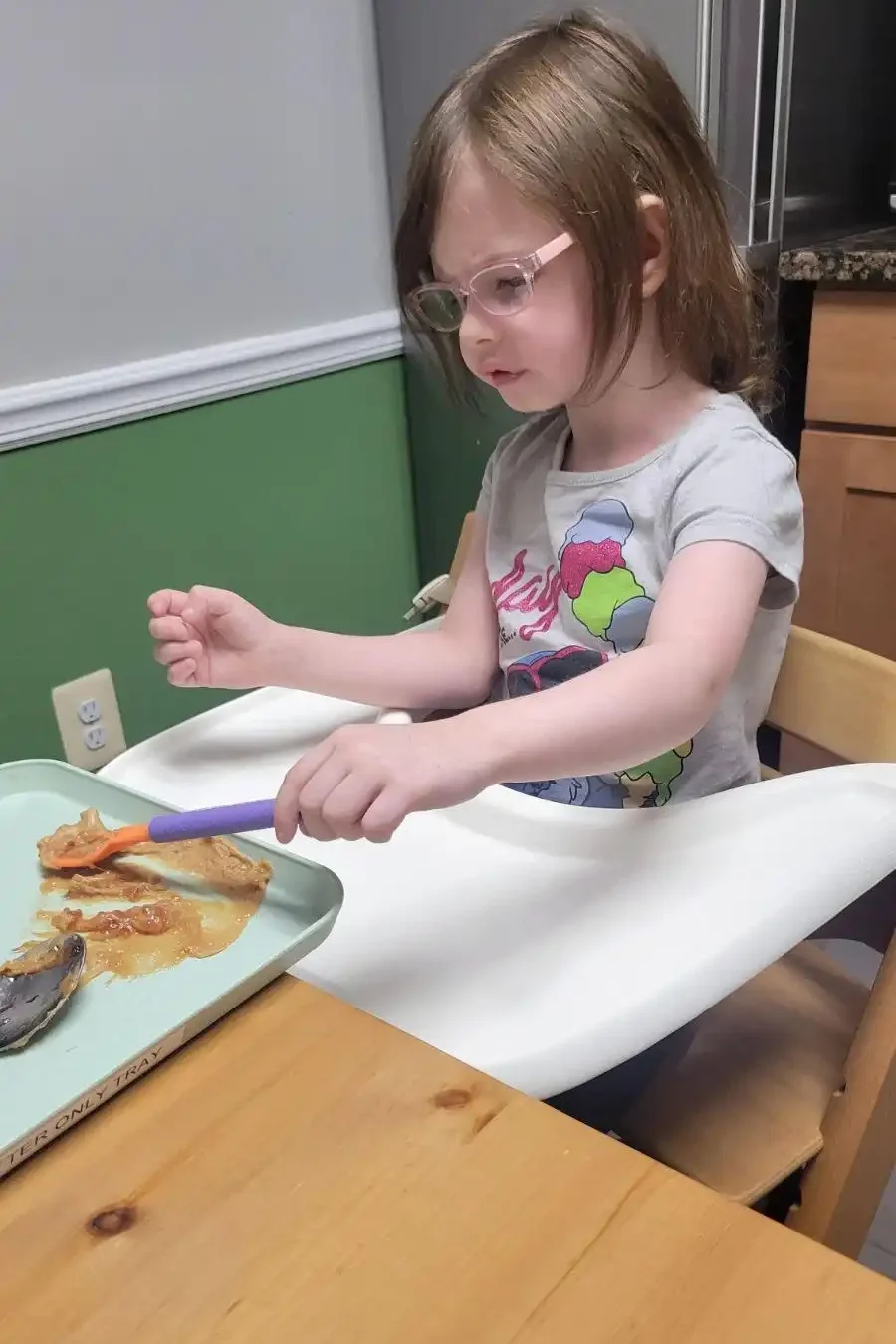
McKenzie began her journey at Flourishing Lives in 2022. Since then, she’s expanded her variety of play and improved her ability to engage in social play with her siblings and peers. She has also improved her ability to follow directions for daily routine tasks and communicate her wants and needs.
Today, we want to celebrate another skill McKenzie has been working on: feeding.
McKenzie has had significant struggles with consuming solid foods. At one point, she had not consumed any solids in over three years, preferring to drink only protein shakes instead. During her time with Flourishing Lives, her treatment team has worked with her to improve the underlying skills she needs to be successful with feeding. However, over the past five months, her mother trusted our team to work with McKenzie as Flourishing Lives’ very first feeding intensive case.
In that time, McKenzie has transitioned from only drinking bottled protein shakes to consuming nutrient- and calorie-rich, age-appropriate soft foods. McKenzie has also added over ten new foods and now drinks from a straw and an open-face cup–all wonderful accomplishments! These tremendous wins have led to slow but consistent weight gain and helped prevent her from needing a feeding tube. We are so proud of how far McKenzie has come and love to see her grow and thrive!
Helping Families Thrive
Activity of the Month: Thanksgiving Sensory Bin
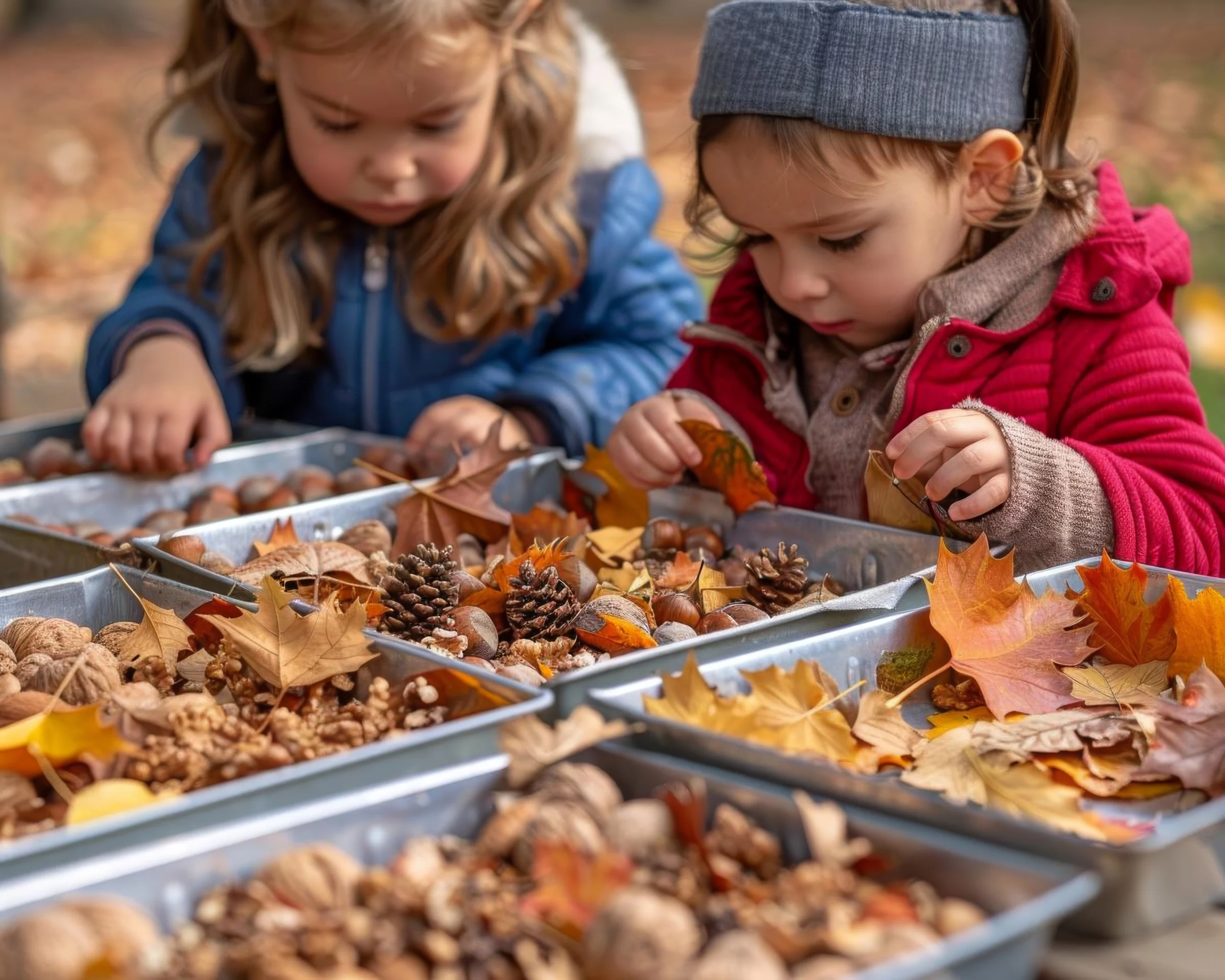
Looking for a fun, imaginative way to celebrate Thanksgiving while encouraging your child’s motor skill development? Create a Thanksgiving-themed sensory bin!
Your Thanksgiving preparations offer a variety of different textures and colors that will work beautifully in a sensory bin. The process is simple, too: just grab a large, low-rimmed plastic storage box (like the kind you use to store your holiday decorations in–you might have an empty one handy!) and fill it with different materials you have on hand. Here are some ideas:
- Dried corn
- Dried rice
- Acorns
- Pine cones
- Real or artificial leaves
- Decorative gourds
- Other Thanksgiving decorations, like straw, feathers, or fake flowers
- Scraps of fall-colored paper or fabric
Next, add some tools to help your child sort and manipulate the items in the bin:
- Cups
- Tongs
- Tweezers
- Spoons
- Bowls
The final step? Let your child go wild! You can let them play with the items in the bin as they see fit or encourage them to work on specific concepts, like sorting by color, pattern, or texture.
Community Events
- Halloween Funfest- Join us on October 20th at Veterans Memorial Park in St. Clair Shores from 12 PM to 4 PM for a day of Halloween fun! There will be special needs children trick-or-treating from 12 PM to 12:30 PM.
3 Tips for Avoiding Sensory Overload This Holiday Season
The holidays are full of bright lights, crowded shopping centers, glitzy decorations, and loud music–no wonder sensory overload can feel inevitable! Fortunately, there are several things you can do to help your child navigate their sensory sensitivities and enjoy the season to the fullest.
1. Know Your Child’s Triggers
- Because the holidays are a kaleidoscope of sensory input, it’s important to understand which elements are most difficult for your child.
- For example, do they struggle with bright, blinking lights? Nonstop music? Crowded environments? Knowing what’s safe and what to avoid will help make the holidays fun for everyone.
2. Create an Action Plan
- It’s also important to know which tools or strategies will help your child if they get too overwhelmed.
- For example, if your child struggles with holiday music, provide them with earplugs or noise-canceling headphones. If your child gets overwhelmed at holiday parties, make sure they have a quiet space where they can go to relax. Are they bothered by bright lights? Choose sensory-friendly holiday decorations.
3. Have a Code Word
- Ask your child to choose a code word they can use when things become too overwhelming. This is an easy way for your child to let you know when it’s time to use the strategies you developed in your action plan.
A Sensory Friendly Holiday Season
Planning ahead and being mindful of your child’s needs can go a long way toward helping them avoid feeling overwhelmed and anxious during the holiday season. Of course, the team at Flourishing Lives is always here if you need some additional help. Give us a call today with any questions you might have!
JOIN OUR THRIVE COMMUNITY!
Tools for healing, resilience, inspiration, value, and education.
Are you looking for expert guidance, a supportive network, and resources to help your family or community thrive? We’re excited to introduce the Thrive Community, a membership for our current patients and community partners that offers ongoing support, education, and connection!
WHAT’S INCLUDED?
- Weekly Office Hours: Join live Google Meet calls to ask your questions and get answers from our experts directly.
COMING SOON…
- 24/7 Access to our Library. Access frequently answered questions anytime.
- Exclusive Content: Access resources, articles, and tips for growth.
- Supportive Community: Connect, share stories, and gain perspectives.
WHY JOIN THE THRIVE COMMUNITY?
- Get expert advice from experienced professionals.
- Empower your journey with tools to build inspiration and resilience.
- Stay connected and supported, even outside of regular therapy sessions.
1:1 Therapeutic Consultation
At Flourishing Lives, our therapeutic consultation program helps parents and family members actively engage and understand their child’s therapy journey.
Our daytime therapeutic consultative service gives parents a private space to discuss treatment options, manage everyday challenges, and actively support their child’s progress. Scheduled while your child is at school, these sessions allow for open, candid conversations without distractions. You’ll gain practical strategies to foster a positive and supportive environment at home and within the community.
Highlights
- Personalized guidance
- Ongoing support
- Feel empowered
- Increased involvement
- Reduce anxiety
- Gain more tools for success
Getting started is easy! Contact us to schedule your consultation for a smooth, supportive experience.
- 1 session for $180
- 4 sessions for $520