

Regulation Activities to Help Your Child Thrive During the Holiday Break
The holidays are just around the corner! This is such a fun time of year, with favorite treats, beautiful decorations, and special holiday outings and gatherings. But all the fun and excitement also bring situations that can be difficult for kids with sensory processing or self-regulation challenges.
Travel, noisy spaces, tons of unfamiliar sensory input: all can lead to kids feeling overwhelmed or out of sorts. It’s essential to make time for regulation activities throughout the holidays so kids can stay calm, focused, and ready to enjoy all the season has to offer.

Flourishing Lives News
We’re excited to share that we are now scheduling evaluations at our St. Clair Shores location for families interested in sessions at our upcoming Rochester clinic! Schedule your evaluation now to be among the first families to begin services when we open.
811 Oakwood Drive, Suite 102 & 103, Rochester, MI 48307
What Are Regulation Activities?
Regulation activities help the body and brain stay in sync by providing the sensory input children need to organize their energy, attention, and emotions. Examples of regulation activities include:
- Deep breathing exercises
- Rhythmic activities like clapping or marching in time to music
- Sensory toys like kinetic sand or stress balls

Get Started Today
Different kids will benefit from different activities, so it’s important to find ones that resonate with your child. You want something that helps your child feel just balanced and regulated: not too tired, not too wired, and ready to participate, connect, and have fun.
To get you started, here are some ideas from the Flourishing Lives team.
4 Fun Regulation Ideas for Holiday Break
1. Heavy Work for Calm and Focus
Activities that involve pushing, pulling, lifting, or carrying movements provide deep pressure and proprioceptive input, which helps calm the body’s nervous system. Have your child:
- Build a snow fort or snowman.
- Bring in and unpack holiday decorations.
- Bake cookies and knead dough.
- Push a laundry basket full of soft toys around the house. Pretend it’s Santa’s sleigh to add an element of imaginative play!
2. Movement for Alertness
When kids seem sluggish or need to wake up for the day, fun movement is the way to go. You might try these ideas:
- Turn on some holiday music and have a dance party, which also supports rhythm and coordination
- Do animal walks (such as polar bear walks or frog jumps) across the living room.
- Set up an indoor obstacle course using pillows, blankets, and some durable holiday decorations.
3. Quiet Spaces to Calm Down
Create a cozy corner where kids can hunker down when things feel too busy:
- Set it up with soft lighting, pillows, blankets, and noise-cancelling headphones.
- Add favorite books, stuffed animals, or fidget tools.
- Encourage your child to engage in some deep breathing exercises or gentle rocking movements while in the space.
4. Oral Motor Input for Organization
Chewing, sucking, and blowing activities help with self-regulation and attention. For example:
- Drink smoothies through a straw.
- Blow bubbles or blow up some holiday balloons.
- Enjoy crunchy snacks like carrots or pretzels.
Helping You Have a Wonderful Holiday Season
Remember that the goal of these regulation activities isn’t to have a perfect holiday but to help your child feel safe, connected, and included in a way that works for them. Small adjustments and sensory breaks can help prevent meltdowns and support smoother transitions throughout the season. If you’re looking for more personalized guidance, Flourishing Lives is here to help! Reach out to our clinic today to get started with our team of occupational therapists.

Patient Spotlight:
Ezra
Ezra has made tremendous progress during his recent round of treatment. He began the Safe and Sound Protocol (SSP), a listening program designed to help the nervous system feel calm and more connected, and has shown great improvements since starting it. Ezra is now communicating his wants and needs more clearly with his parents, sister, and therapists. He is also showing fewer frustrations when things don’t go his way and is better able to adapt, allowing his sister to join in his preferred activities and engaging with her appropriately. In addition, Ezra’s confidence and motor coordination have improved, as he is now more willing to try new and challenging activities during sessions.

Staff Spotlight:
Ruby R. Dockery-Boykin OTD, OTR/L
Ruby graduated from Grand Valley State University in 2016 with an undergraduate degree in Exercise Science, specializing in Health Fitness. After gaining experience as an OT/PT tech, she transitioned into Applied Behavioral Sciences, where she became a lead therapist. Ruby later pursued her Doctor of Occupational Therapy (OTD) degree from the University of Michigan-Flint, graduating in 2023. Her diverse background in both occupational therapy and behavioral sciences has equipped her with a well-rounded approach to helping children thrive.
Passionate about empowering children, Ruby finds fulfillment in guiding the child-led process to build confidence, creativity, and essential life skills. Outside of her professional life, she enjoys crocheting, experimenting with new tea recipes, and cozying up under her heated fuzzy pink blanket. Ruby’s dedication to both personal and professional growth reflects her commitment to making a positive impact on those she works with.
Helping Families Thrive
Activity of the Month:
Create a Sensory-Friendly Space at Home
School offers lots of built-in sensory opportunities, such as moving around the classroom, spending time on the playground, and engaging in structured activities. During winter break, school routines go on pause —and so do these built-in sensory opportunities that help kids stay grounded throughout the day. As a result, kids with sensory processing differences often experience restlessness, dysregulation, or extra energy that’s hard to manage indoors.
Creating a sensory-friendly space at home helps fill this gap. It provides children with a consistent environment to receive the input they need to stay calm, focused, and regulated. That way, the holidays are enjoyable for the whole family.
DIY Sensory Space Setup
We recommend getting your child involved to turn setting up the space into a fun, family project! To get started, you’ll need:
- Blankets and pillows
- Flashlight or soft lamp
- A small basket for fidgets or comfort items
- Paper and markers
- A large cardboard box or pop-up tent (optional)
Instructions for Creating Your Sensory Space
1. Pick the Right Spot
Choose a cozy corner, small nook, or section of a playroom that can be designated as your child’s “sensory zone.” It doesn’t need to be big, just predictable and safe. Let your child help decorate their space. For example, you might have them color a “Calm Corner” sign or choose their favorite blankets.
2. Include Different Types of Sensory Input Using Familiar Tools
Ask your child to pick 3–5 items they use in therapy to include in their space, such as a soft stuffed animal or noise-canceling headphones. Keep them in a basket so they’re easy to grab when needed. Try to offer a mix of calming and alerting options based on your child’s needs:
- Calming: Soft blankets, beanbag chair, dim lighting, white noise, or weighted items
- Deep Pressure (Proprioceptive): Crash pad, couch cushions, or heavy work toys like therapy putty or resistance bands
- Movement (Vestibular): Small indoor swing, rocking chair, or simple movement breaks like animal walks or wall pushes
3. Adjust the Environment as Needed
Reduce overwhelming sounds, bright lights, and clutter. Add soft textures and predictable lighting, such as a small lamp. String lights can make the space cozy and festive.
4. Practice Using the Space Together
Teach your child how to use their sensory space. Let them know that if their body feels wiggly or upset, they can go to their calm corner for a break. Take turns pretending to feel tired or overwhelmed and model going to the sensory space and what to do once there. Visual cues or picture cards can help remind your child when and how to use their space.
5. Consider Implementing a Schedule
Encourage your child to take short sensory breaks every few hours during the day. Even 5–10 minutes of movement, deep pressure, or quiet time can help them stay regulated during long, unstructured days at home.
Recipes of the Month:
Sugar Cookie Trees
Ingredients:
For the Sugar Cookies
- 3 cups all-purpose flour
- 2 teaspoons baking powder
- 1/4 teaspoon kosher salt
- 1 cup unsalted butter, softened
- 1 cup granulated sugar
- 1 large egg
- 1 1/2 teaspoons vanilla
For the Buttercream Frosting
- 2 sticks of butter, room temperature
- 1 pound powdered sugar, sifted
- 2 teaspoons vanilla extract
- 2 tablespoons whole milk or cream
- Dye-free green food coloring
- Holiday sprinkles
Notes: Each cookie layer needs to be slightly smaller than the one below it to give the Christmas tree effect. Graduated round cookie cutters work well.
Directions:
Sugar Cookies
- Sift the flour, baking powder, and salt into a bowl. In a separate bowl, using electric beaters or in a standing mixer, cream the butter and sugar for 3 minutes on medium to high speed until light and fluffy.
- Add the egg and vanilla to the butter mixture and beat until incorporated. Turn the speed to low and slowly add the flour mixture until the dough comes together.
- Divide the dough in half. Place each half onto a piece of plastic wrap, parchment paper, or wax paper and flatten into a round-shaped disc. Wrap the dough discs and chill in the refrigerator until firm, at least thirty minutes to overnight.
- Once chilled, preheat the oven to 350°F. Let the dough rest for about 10 minutes, or until it is soft enough to roll out.
- Using a lightly floured rolling pin, roll the dough out onto a lightly floured surface until 1/4 inch thick and even. Use 3 circle cookie cutters (one large, one medium, one small) to cut out shapes to build the trees. Start at one end of the dough, placing the cookie cutters close together.
- Using a spatula, transfer the cut-outs onto a cookie sheet (preferably a lined Silpat cookie sheet). Bake for 8-10 minutes, rotating the pan halfway through, until the edges of the cookies turn golden. Cool cookies on a rack.
Frosting
- Meanwhile, make the icing. In the bowl of a standing mixer or in a bowl using a hand mixer, beat the butter until it is thick and creamy (about 4-5 minutes). With the mixer continuing to beat, slowly add the powdered sugar until fully incorporated.
- Add in the vanilla, milk or cream, and food color until the buttercream is smooth and creamy. Add more milk or powdered sugar if needed to achieve the desired consistency.
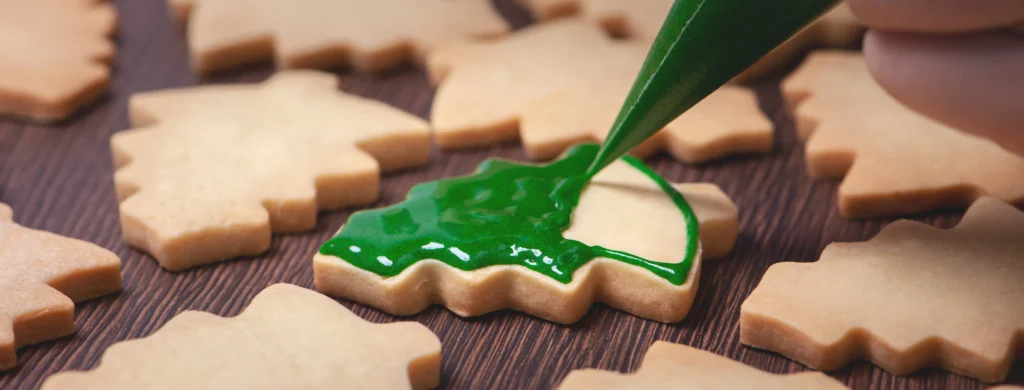
- Place the buttercream in a piping bag with a star tip and pipe a thick layer of cream on the largest cookie in a circular pattern. Top with a medium-sized circle cookie, and pipe another layer of cream in a circular pattern. Finally, top with the smallest cookie. Pipe a circular pattern and end with a tip to resemble the top of a Christmas tree. Immediately add sprinkles so they will adhere.
The Flourishing Lives Holiday Gift Guide
Sensory and Speech-Friendly Picks from Our Team
Looking for gift ideas for a child in your life who benefits from sensory integration or speech support? Our team is here to help with gifts that are both fun and purposeful!
We’ve curated a selection of toys, books, games, and more that can make a real difference for kids with sensory processing challenges. You can find all our favorites at our Amazon storefront.
Why These Gifts Are a Great Choice
- They offer sensory input (vestibular, proprioceptive, tactile) that supports body regulation and motor skills.
- They encourage communication and play, promoting expressive language and engagement.
- They’re fun! Kids want to use them, which means they’re working on therapy goals in their day-to-day life.


Feel confident at the table again—without the power struggles
Mealtimes don’t have to be this hard
- You’re doing everything you can—cutting food just right, offering all the favorites, reading every tip online.
- And still, your child refuses to eat. Or cries. Or gags. Or throws their plate.
- You’re not failing. You’re just missing the right support.
- “Let’s change that”