

Keeping Routines During Summer for Kids with Sensory Processing Needs
The freedom of summer has one major downside, particularly for kids with sensory processing difficulties: major changes in routine.
When a child struggles with sensory processing, predictability and structure often provide a sense of safety and stability that helps them thrive. So, while summer’s long days and family vacations can bring a lot of potential for fun, the disruption in routine can also become overwhelming or unsettling.
The key to an enjoyable summer for everyone is maintaining routines and consistency throughout the summer months. Here are some tips from the Flourishing Lives team to help ensure your child has a fun, exciting season.
Seven Ways to Create a Sensory-Friendly Summer
- Keep Consistent Wake-Ups and Bedtimes: Even if your schedule is more relaxed, aim to keep your child’s wake-up and bedtime within 30–60 minutes of their school-year schedule. This simple strategy helps maintain sleep patterns and supports emotional regulation. It will also make transitioning back to school easier come fall!
- Keep Regular Meal and Snack Times, Too: Regular meal times are just as important as a regular sleeping schedule when it comes to providing a predictable rhythm to the day. And with the extra free time, we encourage you to include your child in meal prep when you can. This gives them a chance to practice life skills while also getting meaningful sensory input through smell, touch, and taste.
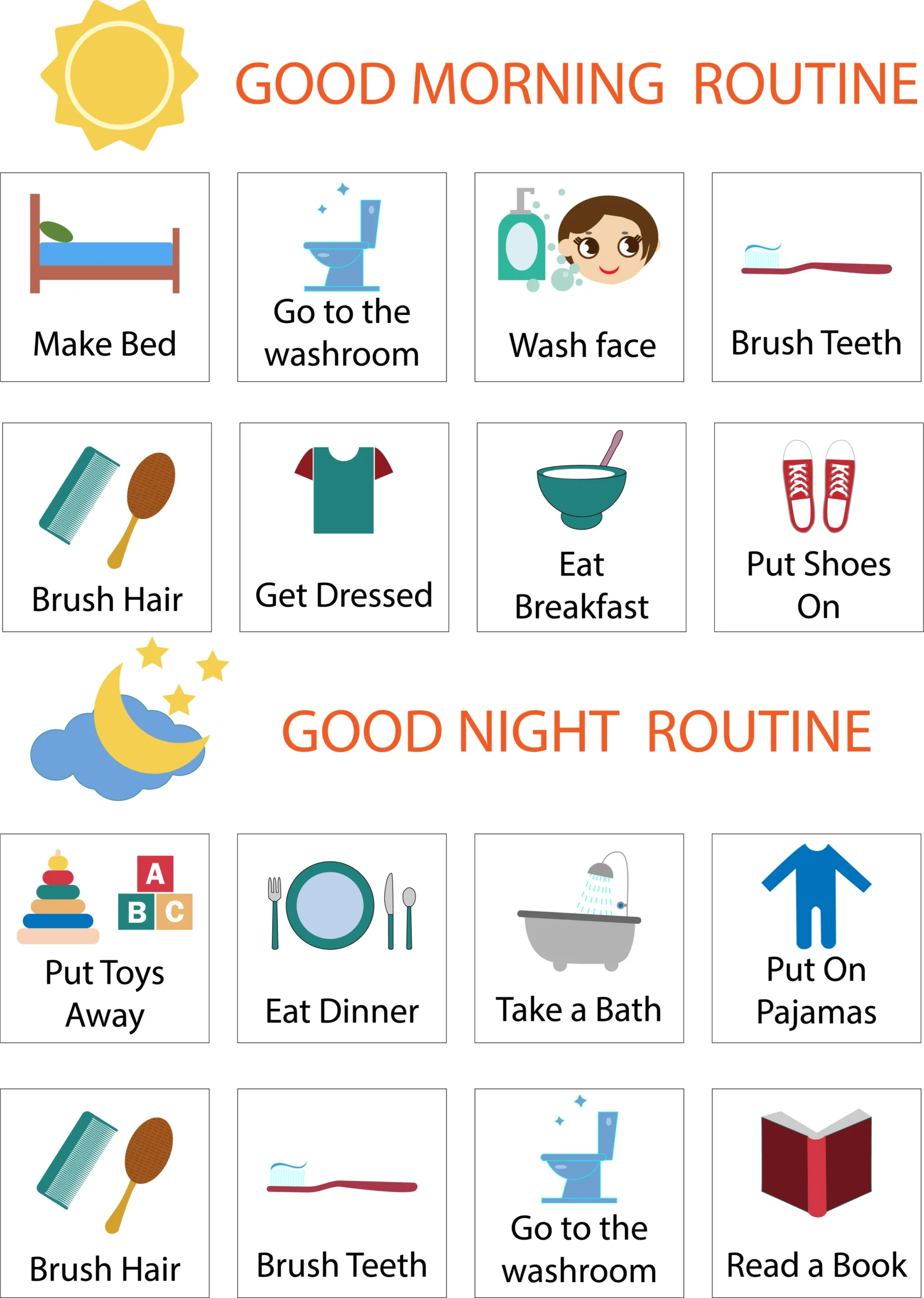
- Create a Visual Schedule: A visual schedule incorporates pictures, icons, or words (whatever works best for your child) to help them understand the day’s structure and routine. Displaying it will help your child know what to expect each day, reducing anxiety and supporting a stronger sense of independence. When creating it, be sure to include:
- Morning routines like brushing teeth or having breakfast
- Planned activities like playdates, therapy sessions, or outings
- Downtime and sensory breaks
- Evening routines like baths or storytime
- Plan Transitions and Built-in Breaks: Even with a visual schedule, summer activities tend to be more spontaneous. That’s why it’s important to provide tools like timers, countdowns, or “first/then” language so your child has time to prepare for transitions. When a big routine change is coming (say, an exciting day at an amusement park), these tools help signal the upcoming disruption. You also want to plan intentional downtime to help your child reset after high-energy or highly stimulating activities.
- Make Sure Each Day Features Sensory Activities: Make sensory input part of your everyday routine. You don’t need anything fancy–simple activities can provide just the right amount of support. This daily “sensory nutrition” can help your child stay regulated. Here are some ideas to get you started:
- Movement activities like jumping, swinging, or animal walks
- Tactile play, such as playing with sand, water, or Play-Doh
- Calming activities like listening to music, snuggling up in a weighted blanket, or rolling up in a blanket burrito
- Stay Connected to Therapy When Possible: If your child works with the team at Flourishing Lives during the school year, summer is a great time to continue or even increase support. Plus, maintaining progress and consistency over the summer can help your child see progress and support a smoother transition into fall routines.
- Embrace Flexibility (With Boundaries): One of the joys of summer is its free-flowing nature, and you don’t have to give that up entirely to help your child feel comfortable. A loose but familiar structure (like morning routines, activity blocks, and consistent wind-down times) helps kids feel grounded while still having fun. We also suggest letting your child help plan some of the summer’s activities. They’ll feel empowered and more invested in the joy the season offers.

Every Routine Looks Different, So Find the One That Works For Your Family!
There’s no one-size-fits-all solution when it comes to helping kids with sensory processing difficulties navigate summer. What matters is creating a predictable routine that meets your child’s particular sensory needs while still allowing for fun, adventure, and downtime.
If you’d like personalized guidance on adjusting routines or building a sensory-friendly summer plan, remember that the Flourishing Lives team is here to support you! Schedule an appointment with us today to get started.
Our Favorite Summer Sensory Activities for Kids
Summer is a great time to encourage exploration, creativity, and sensory-rich play! The unique sights, sounds, and scents of summer give kids a chance to have their sensory needs met in a way that feels fun and natural. Here are a few of our favorite activities for engagement and regulation this summer.
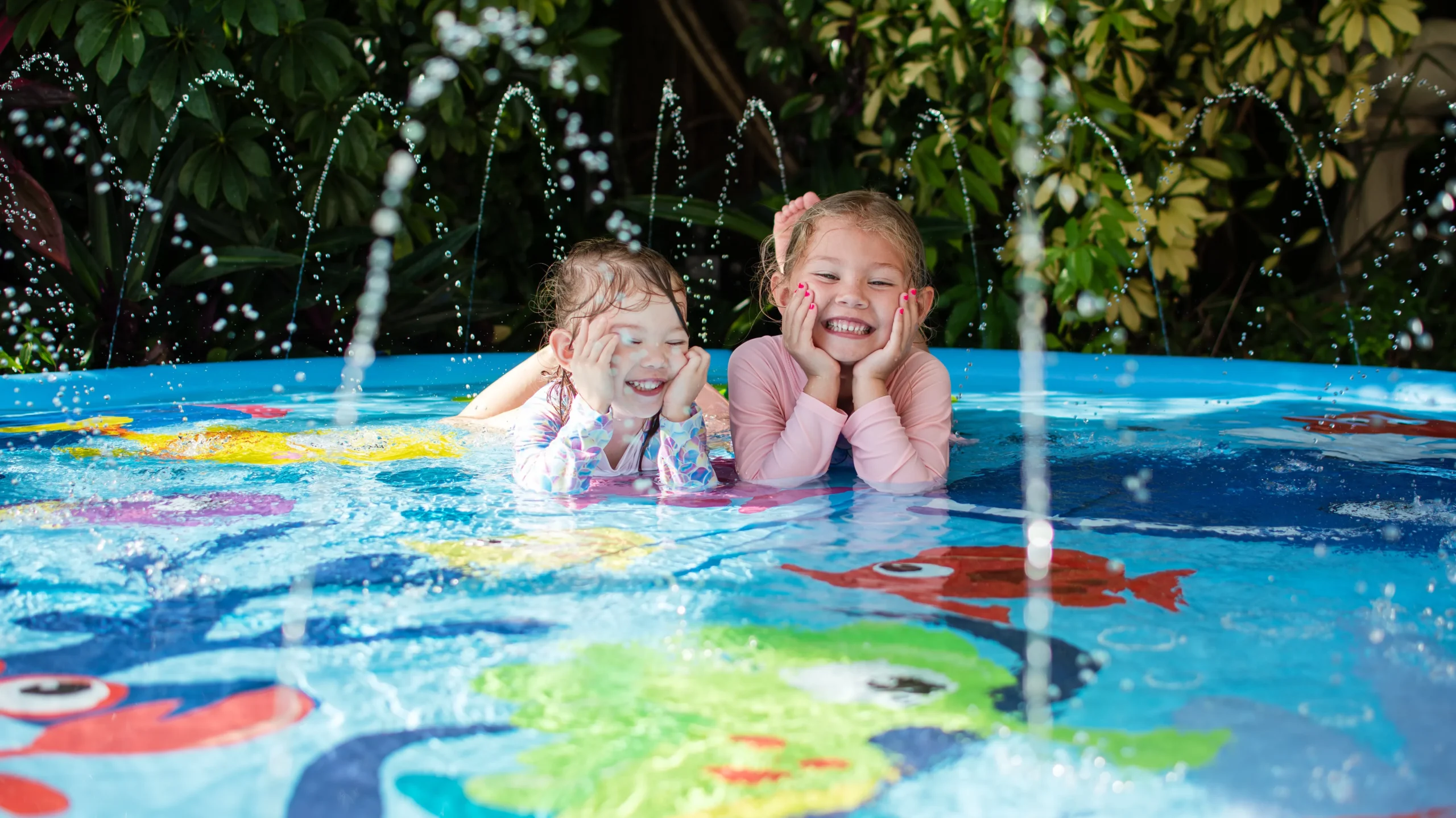
- Water Play | Type: Tactile + Proprioceptive: Water and summer go hand in hand, but water is also an excellent sensory medium that can be both calming and stimulating. It offers several unique tactile inputs as kids explore its temperature, texture, and resistance. Try these activities:
- Splash pads
- Kiddie pools or sprinklers
- Water balloon games
- Pouring and scooping water with measuring cups
- Freezing toys in ice cubes to chip and melt
- Nature Walks and Scavenger Hunts | Type: Visual + Auditory + Proprioceptive: Nature is in full bloom during the summer, and the outdoors provides all-natural sensory input through various movements, sights, and sounds. Head out to a nearby park and encourage your child to explore nature at their own pace and comfort level. Try these activities:
- Collect items with different textures (leaves, rocks, pinecones)
- Listen for birds or rustling leaves
- Walk barefoot on grass or sand
- Use a weighted backpack for proprioceptive feedback
- Messy Play | Type: Tactile + Olfactory: Summer’s carefree reputation makes it the perfect time to embrace mess without worry. Kids with tactile defensiveness can particularly benefit, as it helps them get comfortable with different textures in a low-pressure setting. Try these activities:
- Shaving cream art
- Mud kitchens
- Oobleck or slime
- Finger painting or sponge painting
- Movement Games | Type: Vestibular + Proprioceptive: Heavy movement activities are an important part of sensory integration. They help regulate the body, build coordination, and support body awareness. Try these activities:
- Obstacle courses in the backyard
- Jumping on a trampoline
- Swinging, climbing, and crawling on playground equipment
- Bike riding
- Tug-of-war
- Animal walks, such as a bear crawl or crab walk
- Sensory Bins with a Summer Twist | Type: Tactile + Visual: Creating summer-themed sensory bins with items that reflect the season is a great way to combine tactile and visual input with fine motor skill development. Incorporate these elements:
- Sand and seashells
- Water beads with ocean animals
- Rice dyed in summer colors like blue, yellow, or red
- Scoops, spoons, and funnels for fine motor play
- Calming summer scents (like citrus)
- Chill-Out Zones | Type: Calming + Regulation: All the excitement of summer means it’s even more essential to create cool-down stations for kids who are easily overwhelmed. These stations can help your child self-regulate when sensory input becomes too much. Try these strategies:
- When doing outdoor activities, create a shaded area with a tent or umbrella.
- Use noise-canceling headphones in loud spaces.
- Have fidget toys or weighted lap pads available.
- Set aside quiet time for reading, working on a puzzle, or coloring.
Make Summer Fun for Your Child
Every child has unique sensory needs. Some may crave more movement, while others may need quiet moments to regroup. Try different activities and follow your child’s lead. Your goal isn’t to fill every moment of the day but to provide the right kind of input at the right time. That way, your child can enjoy summer in a way that works for them. Need help building a sensory routine or figuring out what activities will most benefit your child? Flourishing Lives is here to help. Reach out to our team anytime!
Patient Spotlight: Cashton
We’re so proud of Cashton, one of our speech therapy superstars! He’s been making amazing progress using his trial AAC (Augmentative and Alternative Communication) device.
He recently independently introduced himself to a peer, which was such a powerful moment of confidence and communication. He’s become more engaged in play routines, even asking his therapist to take turns, and is full of excitement about adding fun and meaningful words to his device.
At home, he’s been using his trial device to communicate with family, helping to strengthen his relationships and independence. We’re currently in the process of getting approval for his very own AAC device, and we can’t wait to see all the ways he’ll continue to grow and express himself.
His journey is a true reminder of how the right tools and support can open up a world of possibilities.
Community Event: The MISD Health and Wellness Fair
We are excited to participate in the MISD Health and Wellness Fair on Saturday, August 16th! Join us and several other community partners to learn more about enhancing your family’s physical and emotional well-being.
Price: Free!
Time: 10 AM – 2 PM
Location: Macomb Intermediate School District | 44001 Garfield Road Clinton Township, MI 48038

Staff Spotlight: Ash Borek
As a stepmom to a daughter with special needs, being part of the Flourishing Lives team brings me so much joy and hope. I truly love what our clinic stands for and the impact we make in the lives of families. I’m someone who embraces life with passion and purpose. With a deep love for organizing and reading, I find joy in creating order and discovering new worlds through books. For me, organizing isn’t just about tidying up a space. It’s about making room for what truly matters.
I’m also a proud advocate for local businesses. I care deeply about supporting my community by shopping small and uplifting local entrepreneurs. My dedication to giving back extends to another cause close to my heart: dog rescues. Whether volunteering, fostering, or spreading awareness, I’m committed to supporting the animals and organizations that need it most.
When spring arrives, you’ll often find me in the garden, transforming our yard into a peaceful oasis filled with colorful blooms, from cheerful sunflowers to delicate wildflowers. Gardening is more than a hobby; it’s a sanctuary that brings peace and fulfillment all summer long.
And now, life feels even more meaningful with my new family. With a loving husband and stepdaughter by my side, each day is filled with laughter, love, and beautiful moments we’ll cherish forever. I believe life is all about nurturing what I love: my family, my community, and my passions for nature and service.
Helping Families Thrive

Activity of the Month: Ice Painting
When the temperatures soar, we love this creative twist on finger painting! Creating ice “paintbrushes” allows your child to explore the sensory attributes of ice (its cold temperature, smooth texture, and melting properties) while engaging with colors and creativity.
How to Set up an Ice Painting Session
- Add water to an ice tray (be careful not to overfill).
- Add a drop of food coloring to each ice well. Mix them together with a popsicle stick.
- Cut popsicle sticks in half so they aren’t overly long. Add half a popsicle stick to each well to serve as a handle.
- Freeze the tray overnight.
- When it’s time to paint, lay out several sheets of watercolor paper. It’s important to use watercolor paper specifically, as it can withstand the melting ice without tearing. You can get it at any art supply store.
- Pop out the colorful ice and encourage your child to use it like a paintbrush. Draw shapes, mix colors, and have fun!
A Few Additional Tips
- Add multiple colors to each well for a cool rainbow effect, although in those cases, don’t mix the colors.
- Add scented extracts like vanilla or peppermint when preparing the ice to provide even more sensory input.
- Take the station outside for easy clean-up.
- Let your child lead the way, and they may surprise you with what they create!

Recipe of the Month: Fourth of July Cookies
Ingredients:
- 2 ½ cups all-purpose flour
- 1 ½ cups cake flour
- 2 tsp. cornstarch
- 1 tsp. baking soda
- 1 tsp. baking powder
- 1 tsp. salt
- 1 cup cold, unsalted butter, cubed
- 1 cup brown sugar, packed (dark or light)
- ½ cup granulated sugar
- 2 large eggs
- 2 large egg yolks
- 2 tsp. vanilla extract
- 3 cups milk chocolate chips (or less if desired)
- red and blue gel food coloring
- edible glitter stars
Directions:
- Line two baking sheets with parchment paper or silicone baking mats. Set aside. Preheat the oven to 400°F.
- Combine all-purpose flour, cake flour, cornstarch, baking soda, baking powder, and salt in a large bowl. Set aside. Place the cubed butter and sugars into the bowl of a stand mixer and secure the paddle attachment. Cream butter and sugar until smooth (about 2-3 minutes).
- Add the eggs, egg yolks, and vanilla extract to the creamed sugar and blend until mixed. If any of the mixture is sticking to the sides of the bowl, use a rubber spatula to knock it off the sides and mix again.
- Gradually add the combined dry ingredients to the egg and sugar mixture. Mix until incorporated.
- Add in the chocolate chips and mix until just combined. Divide the cookie dough into 3 equal sections. You can eyeball it or use a kitchen scale for accuracy.
- Add red food coloring to one section, blue to another, and leave the third section as is. Mix the colored sections until the dye is incorporated throughout the dough. Add enough food coloring to get a nice deep red and blue color. Adding too little will make the cookies look pastel. If you feel the dough has gotten warm or sticky and hard to work with, refrigerate it for a few minutes.
- Roll each dough section into a 15-inch log and place next to each other on plastic wrap or parchment paper. Wrap and roll the three cookie dough logs into 1 big uniform log. Be careful not to completely blend them (you want the colors to be distinct).
- Cut a section of the dough for the size cookie you want, roll it into a ball, and place it on the prepared cookie sheet. This recipe will make 24 small cookies or 12 very large cookies
- Bake for 10 minutes or just until the edges begin to brown. Let the cookies continue to cook on the cookie sheet for about 5-10 minutes after you remove them from the oven, then transfer to a cooling rack. If desired, gently press more chocolate chips on top of the cookies while they are warm.
- Decorate with edible glitter stars and enjoy!
JOIN OUR THRIVE COMMUNITY!
Tools for healing, resilience, inspiration, value, and education.
Are you looking for expert guidance, a supportive network, and resources to help your family or community thrive? We’re excited to introduce the Thrive Community, a membership for our current patients and community partners that offers ongoing support, education, and connection!
WHAT’S INCLUDED?
- Weekly Office Hours: Join live Google Meet calls to ask your questions and get answers from our experts directly.
COMING SOON…
- 24/7 Access to our Library. Access frequently answered questions anytime.
- Exclusive Content: Access resources, articles, and tips for growth.
- Supportive Community: Connect, share stories, and gain perspectives.
WHY JOIN THE THRIVE COMMUNITY?
- Get expert advice from experienced professionals.
- Empower your journey with tools to build inspiration and resilience.
- Stay connected and supported, even outside of regular therapy sessions.
1:1 Therapeutic Consultation
At Flourishing Lives, our therapeutic consultation program helps parents and family members actively engage and understand their child’s therapy journey.
Our daytime therapeutic consultative service gives parents a private space to discuss treatment options, manage everyday challenges, and actively support their child’s progress. Scheduled while your child is at school, these sessions allow for open, candid conversations without distractions. You’ll gain practical strategies to foster a positive and supportive environment at home and within the community.
Highlights
- Personalized guidance
- Ongoing support
- Feel empowered
- Increased involvement
- Reduce anxiety
- Gain more tools for success
Getting started is easy! Contact us to schedule your consultation for a smooth, supportive experience.
- 1 session for $180
- 4 sessions for $520