

Ten Reasons to Choose Flourishing Lives for Speech-Language Therapy
Choosing the best speech-language pathologist for your child’s needs is a major decision. After all, effective speech-language therapy isn’t just about improving pronunciation–it’s about helping your child communicate with the world.
At Flourishing Lives, we believe speech therapy is about more than just pronunciation—it’s about giving children the tools to express themselves, build relationships, and grow in confidence.
We focus on helping children build strong communication skills in a supportive and encouraging environment. Our team understands that each child learns differently, and we tailor our approach to their needs. Today, we want to share ten things that make Flourishing Lives a unique choice for speech-language therapy–and why we hope you might consider trusting us to help develop your child’s communication skills!
Why Families Trust Flourishing Lives for Speech Therapy
1. Our Fun Environment
At Flourishing Lives, we want you to have fun! We work to create a flexible, natural environment that fits your needs. No item is required to stay within a single room, so we can use our creativity to make each plan come to life. You also have access to rooms that other therapists and clients are using. However, if you’re more comfortable in an independent session, you can reserve rooms for 1:1 interactions.
2. Our Focus on Carryover
Speech therapy occurs in the same setting as our occupational therapy services, which promotes the carryover of communication skills into other settings, such as home and the community. We also take a client-led approach to speech therapy. This means that children choose activities that most interest them, and we incorporate specific goals and interventions into these activities to foster functional language. Client-led therapy bridges the gap for meaningful connection and communication.
3. Our Age Inclusivity
We serve clients between the ages of 0 and 99! Most speech therapy locations specialize in a certain age group, which means clients have to switch locations as they grow. At Flourishing Lives, all age groups can mingle and learn together, allowing us to foster meaningful relationships with all our clients.
4. Our Flexible Schedule
We understand that every family’s schedule looks different. Our team offers flexible appointment times, including after-school and weekend sessions, to make speech therapy more accessible for busy families.
5. Our Wide Range of Resources
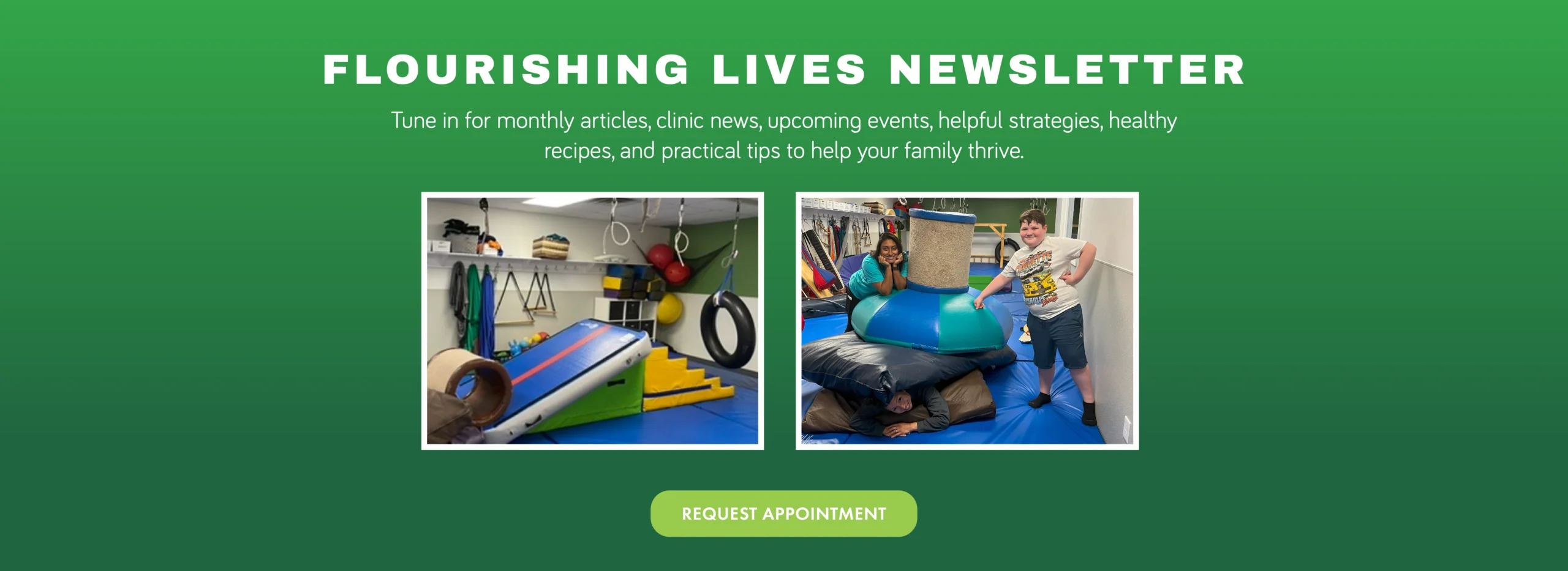
At Flourishing Lives, our therapy spaces are designed to promote movement, engagement, and sensory exploration. Our clinic features an open gym, multiple swing suspensions, a bean pit, and spaces for ziplining and rock climbing—all of which help children develop core strength, coordination, and sensory regulation in a fun, natural way.
6. Our Focus on Family Involvement
Caregivers and loved ones are highly encouraged to be in the room with their kiddos as they work with a speech therapist, which allows for real-time collaboration and hands-on learning. By being actively involved, families can reinforce progress at home, ensuring therapy is a natural part of daily life.
7. Our Fabulous Owner
Flourishing Lives is a smaller, family-owned company. We focus on the family unit, our clients’ best interests, and nothing else. Our owner is also a parent who brings that experience to her business perspective.
8. Our Thriving Community
Flourishing Lives is full of individuals who understand the need for safety, comfort, confidence, and support in the context of speech therapy. Providing this kind of welcoming community is essential to our SLP approach. It allows you to connect with other families and professionals who may have similar experiences to your own.
9. Our Passion for Our Field
All year long, the SLP and OT staff at Flourishing Lives collaborate, attend workshops, and stay up-to-date on the most recent research to implement into our practices. No matter your child’s needs, our speech therapy programs are always based on evidence-based practices.
10. Your Endless Possibilities!!!
There is no other place like Flourishing Lives, and that’s why our clients and families here THRIVE! Want to see for yourself what makes Flourishing Lives so special? Schedule an appointment with us today!
Could Your Child Benefit From Speech Therapy?
Many people mistakenly believe speech therapy is just for kids struggling with pronunciation. In reality, speech therapy–also known as speech-language pathology–can help kids with all aspects of communication.
Five Signs Your Child Might Benefit from SLP
1. They have a limited vocabulary.
Is your child struggling to find the right words? Every child develops at their own pace, but if your little one isn’t hitting key speech milestones, early intervention can make a difference. By age 2, a child should know at least 50 words and be able to combine them into two-word phrases. By age 3, a child should know between 500 and 900 words, enough to have words for almost everything.
2. They have difficulty being understood.
Does your child’s speech seem unclear? Do you often have to ask them to repeat themselves? Do friends and teachers struggle to understand them? Then they may have trouble producing certain sounds correctly. This often leads to kids getting frustrated and withdrawing from conversations, another sign to watch out for.
3. They struggle with social communication.
Communication isn’t just about verbal language. Pay attention to how your child communicates as well. For example, they may find it difficult to take turns in conversations and frequently interrupt others. Or they may not respond appropriately to social cues. These behaviors are part of communication, and speech therapy can help address them.
4. They have a hard time expressing their needs.
Look for signs that your child knows what they want to say but has difficulty finding the right words or structuring sentences correctly. In these cases, kids often rely on gestures or pointing to get their thoughts across. They can also become upset when they aren’t understood.
5. They have a hard time answering simple questions.
Difficulties with the language process often manifest when kids are asked simple questions, such as “What’s your name?” For example, they might give an answer unrelated to the actual question, need longer than usual to think of a response, or repeat parts of the question instead of answering it.
Noticed Any Of These Signs? We Can Help
Delays in speech, language, or communication can be worrisome for parents, but the speech-language pathologists at Flourishing Lives are here to help! We work with kids to create a personalized treatment plan that addresses their specific needs, helping them develop the tools they need to thrive. We’re here to help your child thrive! If you’ve noticed signs of speech or language difficulties, our team is ready to provide guidance and support. Contact Flourishing Lives today to schedule an assessment and take the first step toward stronger communication.
Activity of the Month: I Spy
Are you looking for a fun way to encourage speech and language development? One of our favorites is a classic childhood game: I Spy.
The Basic Rules
If you need a refresher, here’s how to play:
- Choose an object in your surroundings and pick an identifying feature, such as color, shape, or function. Let’s say you choose an apple.
- Say, “I spy, with my little eye, something red.”
- Your child will then try to guess what the object is by naming red items they see in the room or asking questions about it.
Using I Spy to Encourage Language Development
I Spy is a simple, engaging game that naturally strengthens language skills while keeping kids entertained. As they search for objects, children practice descriptive language, turn-taking, and problem-solving—key communication skills that build confidence in social settings. However, there are also lots of ways you can modify it for even more language-building fun:
- Take turns being the spy, which helps build conversation skills.
- Use categories to focus on areas your child might struggle with (for example, choose objects that incorporate “s” sounds).
- Incorporate into other activities, such as nature walks, to help your child build skills in different areas.
Patient Spotlight: Everett
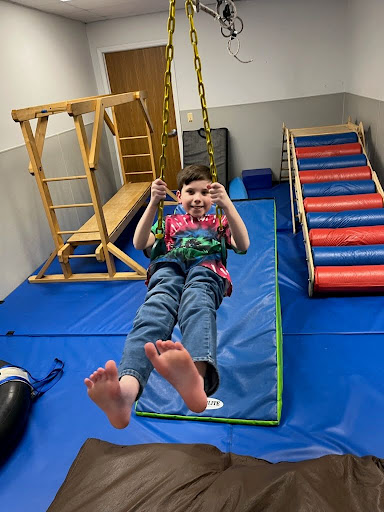
Everett has been part of Flourishing Lives for over five years. During that time, he’s made incredible progress in motor planning, idea generation, coordination, confidence, and the problem-solving skills needed to carry out tasks. He’s also developed essential self-regulation and coping skills for daily life. Thanks to techniques like sensory integration, exercise, therapeutic activities, reflex integration, and craniosacral therapy, Everett experiences fewer challenges throughout his day.
His mom shared that over the past five years, Flourishing Lives has laid the foundation for where Everett is now. He used to refer to therapy as the “play gym,” but as he has grown, he has learned the purpose of OT and can now verbalize how it helps him stay regulated and engage in everyday tasks. When he takes a break to integrate his skills, he misses coming to therapy. Everett used to struggle with handwriting and attending to tasks. Previously, he would avoid these activities. Now, he’s willing to try, which means he can complete his school assignments. He has gained the fine motor skills needed for handwriting, along with increased confidence and adaptability to engage in and complete tasks.
Furthermore, he’s now initiating activities through play that he would not have attempted previously. His confidence has grown, and he recently joined a basketball team as an extracurricular activity! In the clinic, Everett is eager to try new things on his own and engage more with peers during activities.
His mom also told us that therapy has created positive changes for their entire family, equipping them with the tools to help Everett navigate all areas of life. Due to this profound impact, she frequently talks about Flourishing Lives with other families. As a special education educator, she has also been able to apply what she has learned to support students in her classroom. We are so proud of Everett and all that he has achieved!

Staff Spotlight: Vanessa Olivarez, Billing Specialist
Vanessa is our dedicated billing specialist. She brings expertise and precision to the role while always keeping the patient experience at the forefront. What truly motivates Vanessa is watching our patients reach their goals and grow every day—nothing makes her happier than knowing she has played a part in that journey.
In her free time, Vanessa enjoys spending time with her dogs, traveling, and trying new restaurants with her husband and friends. We’re lucky to have such a compassionate and hardworking team member on board!
Helping Families Thrive

Recipe of the Month: Rainbow Spaghetti
Original Recipe From: Little Bins For Little Hands
Ingredients:
- 1 box of spaghetti noodles (supplies to prepare: pot, water, colander, olive oil, pan)
- food coloring (rainbow colors: red, orange, yellow, green, blue, purple)
- 6 plastic zipper sandwich bags
- large pan
- sensory bin
Directions:
- Cook the spaghetti according to package directions. Drain using a colander.
- After cooking, add a very small amount of olive oil and mix around the noodles. Start with a few drops at a time. This helps prevent sticking and ensures the noodles move freely in the child’s hands during sensory play instead of clumping into a sticky, giant mess! Just make sure not to use too much, or it may be too oily.
- Place the spaghetti noodles on a pan and allow the noodles to cool down completely.
- Once the noodles are cooled down, separate the noodles equally into the sandwich bags.
- Squirt food coloring into each bag. Each bag will need about 20+ drops to color well.
- Close the bag and gently shake it around to color the pasta. If you notice that some of the noodles aren’t colored well, you can add more drops of food coloring.
- When the noodles are completely colored, transfer them to a large pan to help them dry a bit.
- Invite your child to explore the rainbow spaghetti as a sensory activity, mixing the colors together. You can keep the spaghetti in the pan or transfer to a sensory bin.
JOIN OUR THRIVE COMMUNITY!
Tools for healing, resilience, inspiration, value, and education.
Are you looking for expert guidance, a supportive network, and resources to help your family or community thrive? We’re excited to introduce the Thrive Community, a membership for our current patients and community partners that offers ongoing support, education, and connection!
WHAT’S INCLUDED?
- Weekly Office Hours: Join live Google Meet calls to ask your questions and get answers from our experts directly.
COMING SOON…
- 24/7 Access to our Library. Access frequently answered questions anytime.
- Exclusive Content: Access resources, articles, and tips for growth.
- Supportive Community: Connect, share stories, and gain perspectives.
WHY JOIN THE THRIVE COMMUNITY?
- Get expert advice from experienced professionals.
- Empower your journey with tools to build inspiration and resilience.
- Stay connected and supported, even outside of regular therapy sessions.
1:1 Therapeutic Consultation
At Flourishing Lives, our therapeutic consultation program helps parents and family members actively engage and understand their child’s therapy journey.
Our daytime therapeutic consultative service gives parents a private space to discuss treatment options, manage everyday challenges, and actively support their child’s progress. Scheduled while your child is at school, these sessions allow for open, candid conversations without distractions. You’ll gain practical strategies to foster a positive and supportive environment at home and within the community.
Highlights
- Personalized guidance
- Ongoing support
- Feel empowered
- Increased involvement
- Reduce anxiety
- Gain more tools for success
Getting started is easy! Contact us to schedule your consultation for a smooth, supportive experience.
- 1 session for $180
- 4 sessions for $520