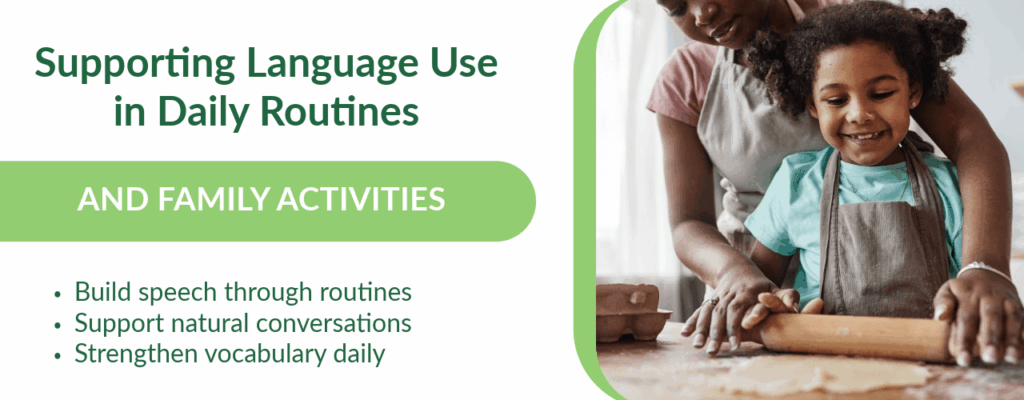
Supporting Language Use in Daily Routines and Family Activities
Do you have a child in speech therapy? Are you wondering how to encourage communication growth outside of their formal therapy sessions? If so, you’ve got the right idea! Language use in routines can be one of the most natural and powerful ways to help children develop their skills.
At Flourishing Lives, we see firsthand how everyday moments like getting dressed, preparing meals, or driving to school all provide opportunities to practice vocabulary, sentence building, and social interaction. When parents and caregivers intentionally support language use in routines, children gain confidence and carry these skills into every part of their lives.
Frequently Asked Questions About Teaching Language Through Daily Routines
How do daily routines help with language use?
Daily routines are predictable, making them the perfect language learning backdrop. Children know what to expect during routines like bath time or bedtime, which lowers stress and allows them to focus on words and communication. Then, when caregivers use consistent words to describe each step, children connect language with action. Over time, these associations build a strong foundation for understanding and expressing ideas.
What are some simple ways to encourage talking during family activities?
Talking through everyday tasks is a simple but powerful tool.
For example, while cooking, you might label ingredients, describe actions like “stir” or “pour,” and ask your child what comes next. During playtime, you can narrate what your child is doing and expand on their words.
These strategies show children how language fits naturally into daily life, making communication feel fun and useful.
How can I support my child if they are shy or reluctant to talk?
Some children may hesitate to use words, especially in busy or overwhelming environments. In these cases, modeling language is key.
Language modeling involves using short, clear sentences to describe what is happening without pressuring your child to repeat them. Over time, they may begin to imitate your words and then expand on them.
Routines like bedtime, which are calm and consistent, are excellent times to practice because they provide a low-stress setting for practicing language.
Should I correct my child when they make mistakes?
It is natural to want to correct errors, but harsh corrections can discourage a child. Instead, try gently modeling the correct version in your response.
For instance, if your child says “doggy runned,” you can say, “Yes, the dog ran fast.” This reinforces proper language without making your child feel criticized.
How does speech therapy guide families in using routines for language growth?
Children learn best when in-clinic strategies are reinforced at home, and our speech therapists can provide you with the necessary training to do so effectively. We’ll provide you with practical techniques that fit into natural activities like mealtime, dressing, or playing outside.
This family-centered approach ensures children practice skills in real-world contexts, making progress more meaningful and lasting.
Can routines support both vocabulary and social communication?
Yes, routines support multiple areas of communication at once:
- Vocabulary grows as children hear and use new words during activities.
- Social communication skills strengthen when children learn to take turns, make requests, or answer questions in the flow of family life.
For example, asking your child to pass the spoon at dinner or encouraging them to tell a sibling “your turn” while playing are natural ways to practice language use.
Do I need special materials or tools to practice language at home?
Not at all. The beauty of language use in routines is that it relies on everyday items and activities you already have. A trip to the grocery store, folding laundry, or preparing a snack can all become language-rich experiences. All you need is intentional communication, consistency, and patience.
Schedule An Appointment to Learn More About Language Use in Routines
At Flourishing Lives, we work with families to help them transform ordinary tasks into powerful learning experiences. By weaving language into daily routines, you don’t have to wait for formal therapy sessions to see progress, and everyday family activities can make a lasting difference.
If you’d like to learn personalized strategies for supporting your child’s communication, schedule an appointment at our St Clair Shores, MI, and Rochester, MI clinics today!