


Making the Most of
Boosting Your Child’s Confidence Before the First Day of School
The new school year is almost upon us, but often, it’s the weeks leading up to the first day that can be the most difficult for kids. They might feel nervous about meeting teachers and classmates or uncertain about changes to the daily schedule they’ve gotten used to over the summer.
Remember, these feelings are completely normal. Kids often need extra time to adjust to new routines and environments, even for small changes–and back to school is usually a big change!
That’s why it’s important to help your child feel confident in the weeks leading up to the start of the school year. Starting the transition now gives your child the time they need to become familiar with what’s ahead and gradually adjust to changes, rather than facing them all at once. That way, on the first day, your child is calmer, more organized, and ready to participate more confidently at school and throughout their daily routines.
Five Simple Tips to Build Confidence Before School Starts
Practice Morning Routines Early
A sudden change from relaxed summer mornings to busy school days can leave children feeling rushed and overwhelmed. Practicing the school routine a week or two before classes begin will let your child know what to expect, which supports emotional regulation and helps your child focus more of their energy on learning and connecting with their peers.
What Should You Practice?
- Waking up in time for school
- Getting dressed independently
- Eating breakfast together
- Packing a backpack
- Leaving the house at the same time you’ll need to during the school year
Visit the School Beforehand
New places can be intimidating. Visiting the school campus before the first day gives your child a chance to explore the space without the pressure of crowded hallways or new classrooms. Even one visit can make a big difference in helping your child feel more at home.
What Should You Explore?
- Walk around the outside of the building
- Spend time on the playground
- Practice walking to the entrance
- Point out where families drop off and pick up students
- Talk about what your child might see during a school day
Create a Simple Visual Schedule
A visual schedule helps break school day routines into manageable steps and creates a greater sense of predictability. Use a blend of pictures and simple words to spell out your family’s specific routine.
We also recommend making time to review the schedule with your child until they feel comfortable with it. The early evening after dinner is often a good time, as it lets kids know what they can expect the next day.
What Items Should Be Included on the Schedule?
- Wake-up time
- Getting dressed
- Breakfast
- Brushing teeth
- Gathering up supplies
- Riding to school
- Pick-up time
- After-school routine, such as homework or outside time
Pack Appropriate Comfort Items
For some children, keeping a small comfort item nearby (such as in their backpack) can help them feel safe as they adjust to their new school environment. It helps kids feel connected to home while supporting regulation and building confidence at school.
What Are Some Examples of Comfort Items?
- A family photo
- A favorite keychain
- A small fidget tool, if permitted
- A handwritten note inside the lunchbox
Remember to select items that are allowed at your child’s school.
Focus on Connection Before Correction
During times of change, children often need extra patience and encouragement. It’s normal for your child to feel worried or frustrated before the start of the school year, and ensuring they feel understood and supported can help them develop the emotional regulation skills they need to thrive in social situations.
So if your child is experiencing big emotions, don’t jump to offering solutions. Instead, connect with them about their feelings.
What Are Some Ways to Emphasize Connection?
- Listen without rushing to fix the problem
- Acknowledge that new experiences can feel hard
- Celebrate small successes each day
- Offer encouragement instead of focusing on mistakes
- Spend a few minutes playing together after school
Small Steps Can Make a Big Difference
Every child adjusts to the school year at their own pace. However, with preparation and encouragement, the start of the school year can become an opportunity to build resilience, independence, and self-confidence.
And if your child continues to struggle with the transitions to the school year, the Flourishing Lives team is always here to help. Give us a call to learn more about the different ways we can help kids build the foundational skills they need to thrive at school, at home, and throughout daily life.
Contact UsSimple Tips for Back-to-School Sensory Comfort
A new school year can bring lots of new sensory experiences. Some of them–like bright classroom lights or a crowded school bus–are major changes that you’re probably already thinking about. But don’t ignore small changes, either! New school clothes, heavy backpacks, and packed lunches can pose unique sensory challenges, but a few simple strategies can help your child feel more comfortable.
Sensory Tips from the Flourishing Lives Team
01
Choose School Clothes Together
Choose School Clothes Together
Let your child help select clothes with soft, comfortable fabrics, and wash new clothes before wearing them to soften the material. Remove any tags your child finds irritating as well. We also recommend having a “dress rehearsal” where kids can practice wearing their school outfits for a short time before the year starts.
02
Consider Noise-Reducing Headphones
Consider Noise-Reducing Headphones
Busy hallways, cafeterias, and assemblies can feel overwhelming. If your child’s school allows them, noise-reducing headphones can make loud environments more manageable while still allowing your child to stay engaged.
03
Pack a Small Fidget Tool
Pack a Small Fidget Tool
Quiet fidget toys, such as a textured ring or stretchy band, can provide calming sensory input during transitions or downtime. Have your child practice using it at home so they understand how to use the toy appropriately during the school day.
04
Offer Familiar Lunch Foods
Offer Familiar Lunch Foods
School lunches–both packed and from the cafeteria–are often a big source of sensory discomfort. Packing a lunch box with your child’s preferred foods during the first weeks of school can help them adjust to the change. Over time, you can start adding new foods as well.
05
Practice Transitions Before School Begins
Practice Transitions Before School Begins
Have your child pack their backpack, learn their bus route, or explore how they’ll walk into the school building. That way, they’ll feel more confident and organized once they have to perform these routines during the school day.
Looking for a Little Extra Guidance?
We hope these tips can get you started, but if you’re looking for more personalized strategies, make an appointment with the team at Flourishing Lives! We’ll help you identify the strategies your child needs to make the most of the new school year.
Schedule an Appointment
Patient Spotlight: Julian
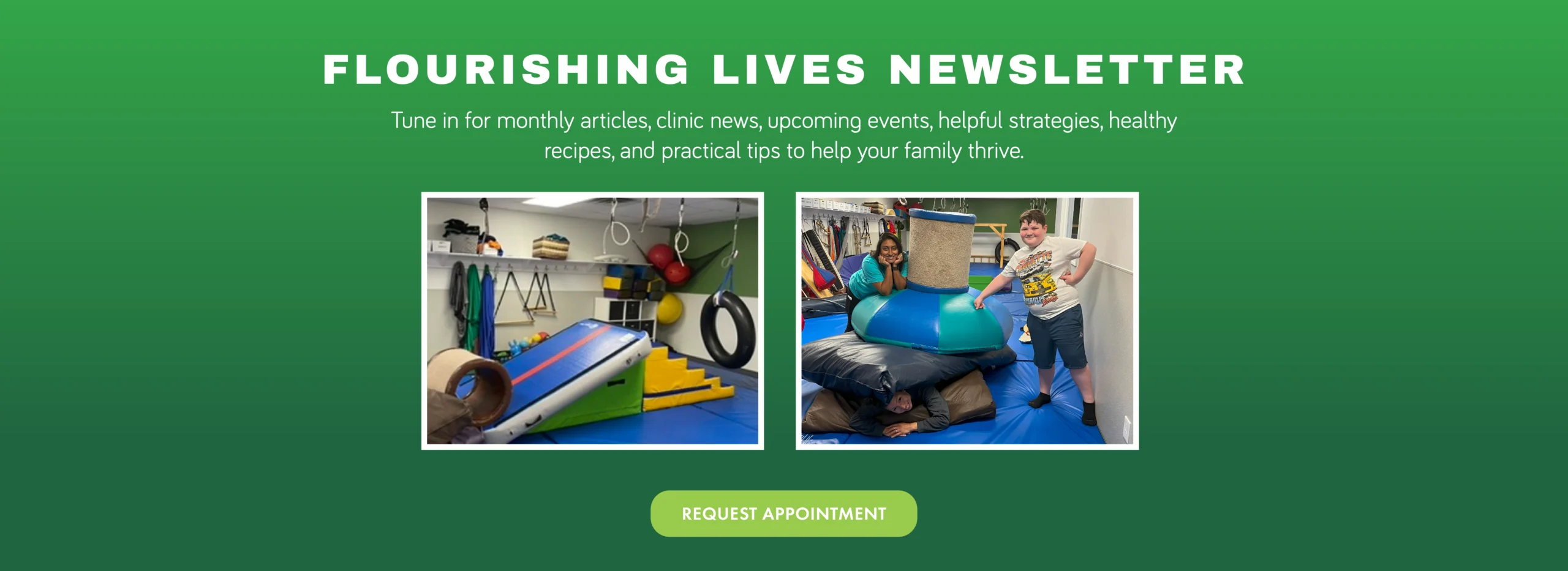
During his time at Flourishing Lives, Julian has made meaningful progress across several areas of development. He has shown growth in his social skills, engaging in more reciprocal play and building stronger connections with peers. Julian has also improved his communication skills, allowing him to interact more effectively and confidently with others. One of his greatest accomplishments has been learning to advocate for his own needs, which has helped him express himself more clearly in a variety of situations. It has been exciting to watch Julian’s motor planning skills develop, as he now approaches obstacle courses with greater confidence, coordination, and ease. Additionally, Julian has developed greater adaptability when things do not go as expected, leading to fewer meltdowns and greater flexibility in navigating challenges. We are so proud of the growth, resilience, and hard work Julian has demonstrated through his journey with us.
Staff Spotlight: Danielle
Danielle earned her Doctorate of Occupational Therapy last year after beginning her career as an Occupational Therapy Assistant in 2017. She brings a strong clinical foundation from her experience working in hospitals, but she developed a deep appreciation for the meaningful impact OT has on children and families while completing a fieldwork rotation at Flourishing Lives.
Danielle is passionate about helping children build confidence, independence, and functional skills that support participation in everyday routines and activities. She enjoys collaborating with families to create engaging, individualized therapy experiences that help kids thrive. Danielle is also a Level 1 Certified Functional Pelvic Health Practitioner and has a special interest in supporting individuals across the lifespan, especially during the postpartum period.
Outside of work, Danielle enjoys spending time with her husband, their two boys, and their Labrador retriever, Goose. They especially love boating on Lake St. Clair with their family and friends. A lifelong figure skater, she has competed nationally in synchronized skating and theatre on ice, and also skated for Michigan State University during college. When not on the ice or water, she can often be found going for walks with Goose, getting ice cream with her boys, reading, or cheering on MSU at football and basketball games.

Help Us Plan a
Family Fun Day!
Flourishing Lives is exploring hosting a special Family Fun Day to celebrate our amazing clients and their families with fun, connection, and community.
We’d love your input! Take our quick survey and let us know what activities, dates, and experiences would make this event the most enjoyable for your family.
Take the Family Fun Day Survey
Activity of the Month:
Fun After-School Conversations
The go-to after-school question for most parents is “How was your day?”
And, unfortunately, the go-to answer for most kids is a quick, “Fine.”
As the new school year kicks into gear, we want to encourage you to try asking more open-ended questions at the end of the school day. Kids will be much more likely to share their experiences, which helps them build crucial communication skills, such as recalling events, describing their feelings, and organizing their thoughts.

Try These Conversation Starters Instead
Instead of asking "How was your day?", try questions that encourage your child to share stories, feelings, and experiences.
- What made you smile today?
- Who did you sit with at lunch or during class?
- What was something new you learned today?
- What was the funniest thing that happened?
- Did anyone help you today, or did you help someone else?
Keep the Conversation Going
Continue the conversation with thoughtful questions that encourage reflection and confidence.
- What game did you play at recess?
- Was there anything that felt tricky today?
- What are you looking forward to tomorrow?
- If you could do one part of today again, what would you choose?
- What made you feel proud today?
More Tips for Great After-School Conversations
Regardless of the question you ask, remember to keep the conversation relaxed. Listen more than you talk, and resist the urge to offer advice unprompted. Feeling heard helps children develop confidence, emotional awareness, and stronger communication skills.
If your child doesn't feel like talking right away, that's okay! Many children need time to unwind after a busy school day. Once they’ve had a chance to relax, try talking while you’re doing an activity together, like sharing a snack or taking a walk. This can help take some of the pressure off.
Remember: Progress Over Perfection
The first few weeks of school are about adjusting—not perfection.
Every family settles into new school routines at its own pace. Some mornings, everything will go exactly as you planned. Others… not so much. But that’s okay! Consistency and patient encouragement are the keys to helping your kids adjust to the challenges of a new school year. So celebrate every little win, offer support when difficulties arise, and remember that progress happens one day at a time.

No-Bake Energy Bites
These no-bake energy bites are the perfect grab-and-go snack for busy school days. Packed with wholesome ingredients, they're easy to make, kid-friendly, and great for lunch boxes or after-school fuel.
- 1 cup old-fashioned oats
- 2/3 cup toasted shredded coconut (sweetened or unsweetened)
- 1/2 cup creamy nut or seed butter of your choice (i.e., peanut butter, almond butter, sunflower seed butter)
- 1/2 cup ground flaxseed
- 1/2 cup semisweet chocolate chips
- 1/3 cup honey
- 1 tablespoon chia seeds
- 1 teaspoon vanilla extract
- Add all ingredients to a large mixing bowl and stir until thoroughly combined.
- Cover the mixing bowl and chill in the refrigerator for 1–2 hours, or until the mixture is chilled. (This will help the mixture stick together more easily.)
- Roll the mixture into 1-inch balls.
- Serve and enjoy!
Storage Tip: Refrigerate the energy bites in a sealed container for up to 1 week, making them a quick and easy after-school snack.
We’re Hiring: Join Our Team!
Flourishing Lives is growing, and we’re looking for passionate occupational therapists, certified occupational therapy assistants, speech-language pathologists, SLP fellows, and mental health professionals to join our team! If you value connection, play-based learning, and helping children feel confident in their communication, we’d love to meet you.
Our unique approach includes:
- Play-based, child-led sessions that build trust and engagement
- Sensory-informed strategies to support attention and regulation
- Strong collaboration with families and other team members
- Focus on functional communication in real-life situations
If you’re looking for a supportive, team-oriented environment where you can make a meaningful impact, we encourage you to apply today.
Helping Families Thrive
Feel confident at the table again—without the power struggles
Mealtimes don't have to be this hard
- You're doing everything you can—cutting food just right, offering all the favorites, reading every tip online.
- And still, your child refuses to eat. Or cries. Or gags. Or throws their plate.
- You're not failing. You're just missing the right support.
- "Let’s change that"