What Parents Should Know About Early Language Development
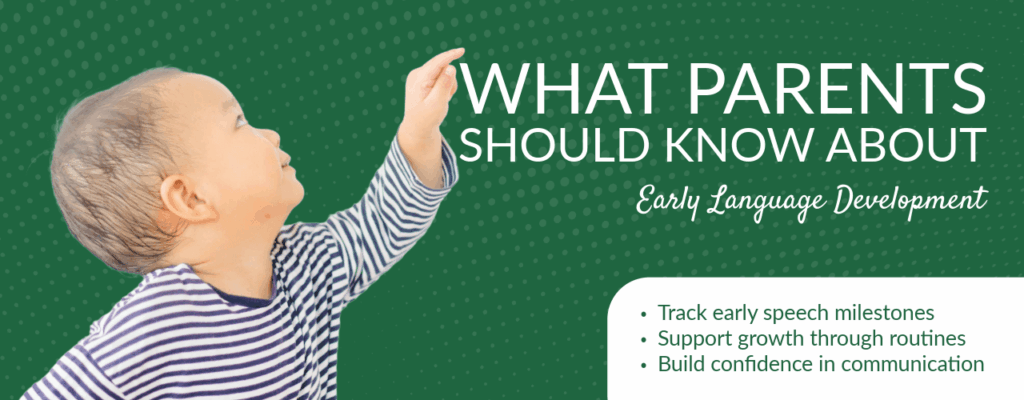
Did you know that your child’s language development starts when they’re an infant? It’s true! Those cute coos and burbles are your baby’s way of learning to communicate, and they’re the first step in a long process of language mastery.
Today, the Flourishing Lives speech therapists are answering some of the more common questions we get about language development in young kids. We hope this guide offers you some clear answers!
Frequently Asked Questions About Helping Kids Develop Language
When do children start developing language?
Language development begins in infancy, long before a child says their first word. Babies use eye contact, gestures, and sounds to communicate needs and feelings. Then, around one year, most children begin to say simple words like “mama” or “bye.” By age two, children often use two-word combinations such as “more juice.”
Early experiences with talking, singing, and reading together provide a foundation for strong communication skills.
What are the early signs of healthy language growth?
In the first few years of their life, you may notice your child:
- Responding to their name
- Following simple directions
- Using gestures like pointing or waving
- Beginning to combine words around age two
By preschool, children are usually able to form short sentences, ask questions, and share their thoughts more clearly.
Every child progresses at their own pace, but steady growth in understanding and expressing ideas is an encouraging sign.
How do I know if my child is delayed in language development?
Possible signs of a delay include:
- Not using words by around 18 months
- Having a very limited vocabulary compared to peers
- Difficulty following simple directions
- Limited eye contact or use of gestures
- Frequent frustration when trying to communicate
Again, it’s important to remember that every child develops at their own pace. However, if these concerns feel familiar, it may be helpful to contact the team at Flourishing Lives. We can help you better understand your child’s strengths and needs.
What role does speech therapy play in early language skills?
Speech therapy encourages children to use words, gestures, and other forms of communication in ways that feel natural and meaningful to them. Our team does this through fun, play-based activities, modeling strategies, and other techniques based on your child’s needs. We take a child-led approach, meaning we follow your child’s interests while targeting essential skills.
Can parents support language growth at home?
Yes, absolutely! Parents actually play a central role in helping children communicate. Helpful strategies include:
- Using daily routines like mealtime, bath time, or getting dressed as opportunities to build vocabulary
- Narrating your actions so your child hears new words in context
- Asking open-ended questions that encourage longer responses
- Reading books together and pausing to talk about the pictures or the story
- Giving your child extra time to respond instead of rushing in
- Expanding on what your child says by adding a word or two
What happens if language challenges are not addressed early?
Children may face challenges with school readiness, making friends, and expressing emotions. However, early intervention makes a significant difference because young brains are especially ready to learn new skills.
Addressing communication needs early helps prevent frustration and supports long-term success in academics and social relationships.
How can I get started if I am concerned about my child’s language development?
The best first step is to seek an evaluation. Our speech therapists can determine if your child is meeting milestones and provide guidance tailored to your family’s needs.
We’re Here to Help Guide Your Child’s Language Development
Early language development is one of the most important parts of childhood growth, and guidance from a speech therapist can make all the difference for your child!
If you have questions or concerns, the team at Flourishing Lives is here to help. Contact our St Clair Shores, MI, and Rochester, MI clinics today to explore personalized care for your child’s communication needs.