
How Occupational Therapy Uses Environmental Adaptations to Help Kids
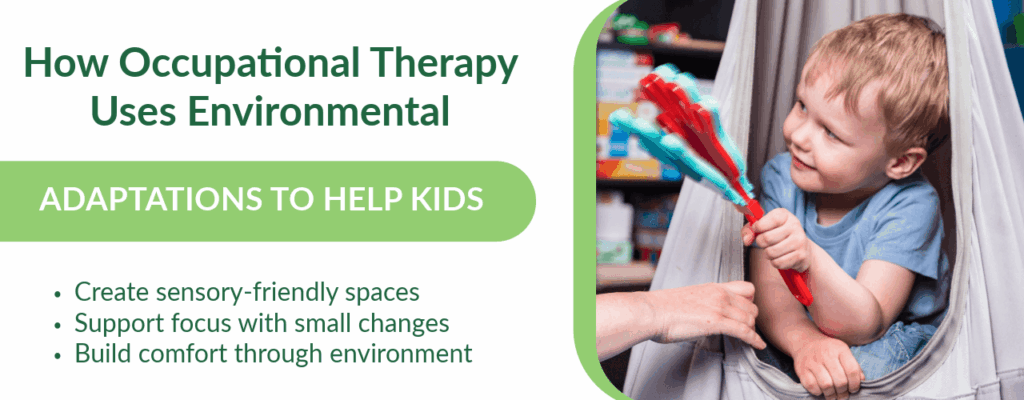
Children grow and learn best in environments that feel safe, supportive, and manageable. In pediatric occupational therapy, environmental adaptations are often key to helping kids succeed. By making thoughtful changes to a child’s surroundings, the Flourishing Lives occupational therapists can help your child reduce stress, build confidence, and encourage independence.
These adaptations may be simple, like adjusting lighting, or more comprehensive, like reorganizing a classroom. But each change is tailored to support how children engage with daily life.
Understanding the Role of the Environment in Development
A child’s environment can either help or hinder growth. Unfortunately, certain environments can feel overwhelming for kids with sensory sensitivities, developmental delays, or attention challenges. Bright lights, crowded spaces, or noisy backgrounds can make it harder to focus and participate.
Our occupational therapists carefully analyze these settings to identify barriers and introduce environmental adaptations that promote regulation and learning. Key areas that we often evaluate include:
- Lighting and sound levels
- Seating and workspace arrangement
- Access to tools and materials
- Transitions between activities
- Sensory input within the space
By adjusting these elements, therapists create opportunities for children to thrive where they spend the most time, such as at home, school, or in community settings.
Environmental Adaptations That Shape Success
Adapting environments is not about changing the child, but about shaping the surroundings to meet their needs. This approach allows kids to use their strengths while reducing frustration and stress.
Examples of Environmental Adaptations
Seating Supports
- Adding cushions, wobble stools, or footrests can improve posture and attention during schoolwork.
Noise Control
- Using headphones, sound-absorbing panels, or quiet zones helps children who are sensitive to background noise.
Visual Organization
- Color coding, labels, or picture schedules reduce confusion and support independence.
Modified Tools
- Adaptive scissors, weighted pencils, or built-up utensil handles make everyday tasks more manageable.
Sensory-Friendly Spaces
- Calm corners with soft lighting, fidgets, or weighted blankets give children a place to self-regulate.
Why Small Adjustments Make a Big Difference
Children often spend hours each day in structured environments like classrooms. Even small modifications can significantly change how they feel and function. For example, lowering the noise level in a busy room may help a child stay engaged longer. A visual schedule can reduce anxiety during transitions. These environmental adaptations not only support comfort but also increase confidence and participation.
Our therapists emphasize that when children feel safe and capable, their natural motivation to learn and grow strengthens. Adjustments to the environment become a bridge that helps them connect with peers, master new skills, and enjoy meaningful activities.
Everyday Takeaways for Families
Parents and caregivers play a vital role in making the home environment supportive. With guidance from our occupational therapists, families can learn to adapt spaces and routines to benefit their child’s unique needs. Some ideas we might suggest include:
- Setting up a consistent, quiet homework area free from distractions
- Using visual timers or checklists to guide daily routines
- Adjusting kitchen tools for easier self-feeding and independence
- Creating calming bedtime rituals with dim lighting and soothing textures
These strategies are easy to implement and often lead to improved comfort, better focus, and more successful daily routines.
Partnering With Flourishing Lives for Lasting Impact
Environmental adaptations work best when tailored to a child’s specific challenges and goals. Our pediatric occupational therapists bring expertise in evaluating both your child and the environment, then designing adaptations that make daily life smoother and more joyful.
At Flourishing Lives, families are welcomed into a collaborative process that ensures each child has the tools and settings needed to flourish. Whether at home, school, or in the community, thoughtful adaptations pave the way for confidence, independence, and growth.