
Why Task Breakdown Is a Game-Changer in Pediatric Occupational Therapy
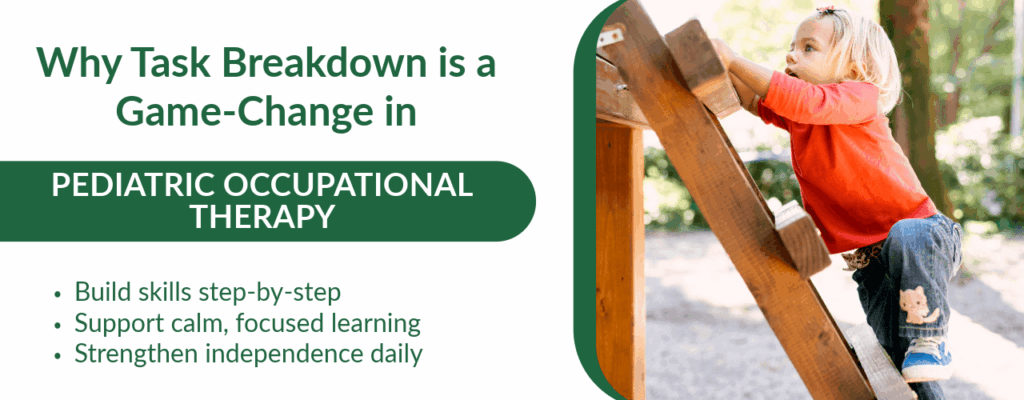
When children face challenges with learning or daily activities, the key to success is often breaking things down into smaller, manageable parts. This approach is called task breakdown, and it’s one of many tools we use here at Flourishing Lives.
It works by making big goals feel achievable for kids. Our therapists help children master each step of an activity, which builds their confidence and sets them up for long-term success.
Seven Reasons Why Task Breakdown is So Effective
1. Going Step-by-Step Makes Learning Easier
When a skill feels overwhelming, breaking it into smaller steps gives children a clear path forward. This makes learning feel possible and reduces frustration, ensuring children experience progress without being discouraged.
2. Confidence Grows With Small Wins
Children thrive when they experience success. Task breakdown gives them multiple chances to succeed along the way. Each completed step is a victory, boosting confidence and motivation. Over time, these small wins add up and help children feel capable of handling bigger challenges.
3. Reduces Stress and Meltdowns
Large or complex tasks can create stress for children who struggle with attention, planning, or coordination. Breaking down tasks lessens the pressure by making goals more approachable. When a child knows exactly what comes next, they are less likely to feel overwhelmed or melt down, which creates a calmer and more positive learning environment.
4. Encourages Independence
Task breakdown allows children to take ownership of parts of an activity, even if they cannot complete the whole thing yet–meaning independence is built step by step. For example, a child may start with the first step easily enough, then gradually add more steps as their skills improve. This helps them build real-world independence at their own pace.
5. Helps Therapists Target Skills Precisely
Every child has unique strengths and needs. Breaking down complicated tasks lets our occupational therapists see exactly where a child is struggling. By isolating steps, therapists can target the specific motor, sensory, or cognitive skills that need practice, making therapy more effective and personalized.
6. Builds Problem-Solving Skills
Children learn not only how to complete a task but also how to approach new challenges. Task breakdown teaches them to think logically about the order of steps and what needs to happen next. These problem-solving skills carry over into school, play, and home life.
7. Supports Long-Term Mastery
Breaking down tasks is not just about short-term success. It sets the foundation for mastering complex skills that children will use throughout life. By gradually increasing responsibility, our therapists help children reach independence in activities that once felt impossible.
Let’s Help Your Child Achieve Their Goals–Step by Step
At Flourishing Lives, we believe every child deserves the chance to succeed and thrive. Task breakdown is one of the many strategies we use to make therapy fun, approachable, and meaningful.
If you are ready to support your child with personalized care, we invite you to connect with us today. Together, we can take the first steps toward growth and independence.