
Why Participation Is the Focus of Modern Pediatric Occupational Therapy
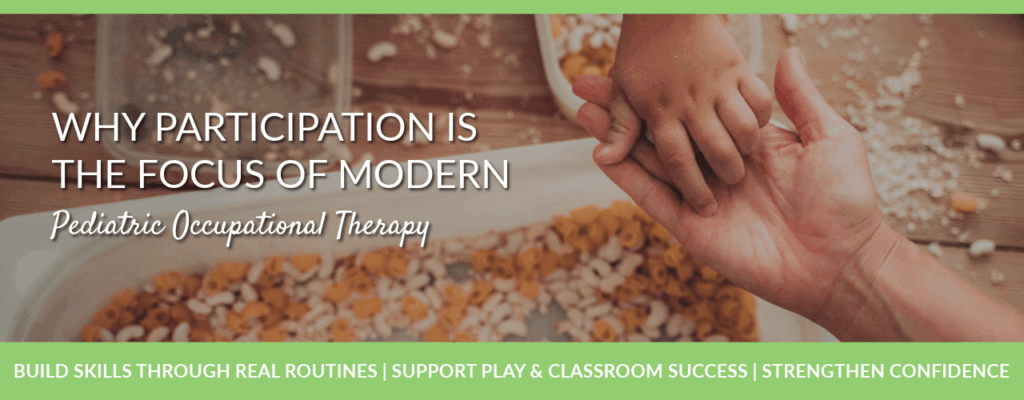
One of occupational therapy’s primary goals is to help children actively participate in daily routines, school activities, play, and family life. That’s why the team at Flourishing Lives utilizes participation-focused therapy as a guiding principle.
This approach recognizes that true progress is not just about what a child can do in a clinic, but how those abilities translate into meaningful participation in the real world.
What Does Participation Mean in Pediatric OT?
Participation focuses on ensuring children can join in everything they need to do throughout the day: have fun with peers on the playground, follow routines at home, or confidently engage in classroom tasks. Occupational therapy has the most value when children feel included and capable in the environments that matter to them.
That’s why participation-focused therapy emphasizes:
- Building confidence in daily routines.
- Encouraging social interaction and play.
- Supporting academic engagement.
- Helping families adapt environments to promote success.
Why Participation-Focused Therapy Leads to Meaningful Progress
Children are motivated when therapy is connected directly to their lives. Instead of repetitive drills, our team uses activities that mirror real-world demands. For example, a child might practice handwriting while writing a card for a family member or improve motor coordination through a favorite playground game.
Key Benefits of This Approach
- Kids are more engaged when therapy feels purposeful, boosting their motivation and self-esteem.
- It promotes skill transfer, as progress made in sessions is easier to apply at home and school.
- It encourages family involvement, with caregivers learning strategies that integrate naturally into routines.
- The focus is not just on short-term skills, but on lifelong participation.
Seeing These Benefits In Action
- Kids who once avoided group play may now eagerly join friends.
- Morning routines may feel smoother because children are more independent.
- Teachers may notice that a child is more engaged and able to follow classroom activities.
How Our Therapists Put Participation Into Practice
Therapists often begin by asking families what daily routines feel most challenging. For one child, it may be dressing independently. For another, it could be navigating group activities at school. From there, therapy sessions are designed around those priorities.
Examples include:
- Practicing buttoning shirts while getting ready for pretend school.
- Playing turn-taking games to build social participation.
- Using sensory strategies that make classroom learning more comfortable.
- Guiding parents in adapting routines so transitions are less stressful.
Participation-focused therapy centers therapy on what children and families find meaningful, creating bridges between skills and everyday life.
Participation-Focused Therapy as a Path to Thriving
Our use of participation-focused therapy reflects a broader understanding that development is most meaningful when it connects to real experiences. Skills do not exist in isolation. They allow children to play, learn, connect, and grow within their families and communities.
At Flourishing Lives, we believe every child deserves the chance to feel capable and included in the moments that shape daily life. We design therapy programs with participation at their heart, tailoring support to each child’s unique strengths and challenges.
If you are ready to help your child thrive at home, in school, and beyond, we invite you to reach out to our St Clair Shores, MI, and Rochester, MI clinics for personalized care and guidance.