
How Occupational Therapy Supports Tool Use for Development
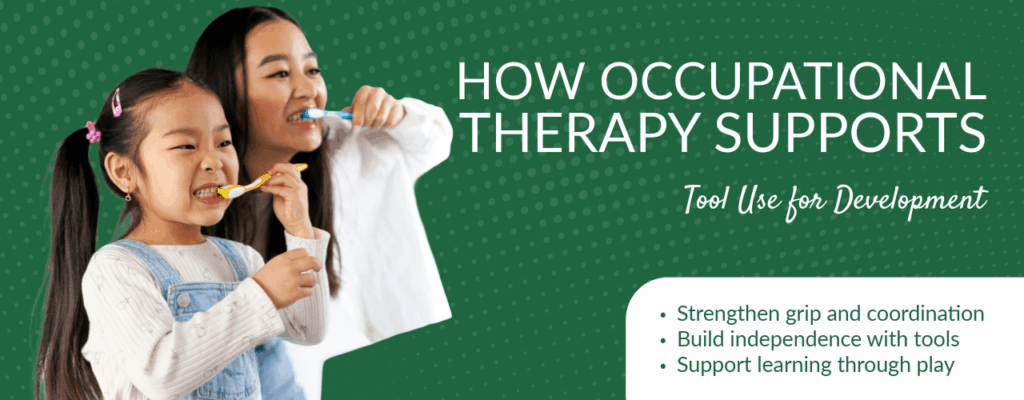
Learning to handle everyday objects is a significant step in a child’s growth. From holding a spoon to brushing teeth or cutting with scissors, these actions are part of what occupational therapists call tool use development.
For some children, mastering these tools does not come easily, and occupational therapy at Flourishing Lives offers strategies and support that make these skills both achievable and meaningful.
The Importance of Developing Tool Use
Using tools connects fine motor skills, hand-eye coordination, sensory processing, and problem-solving into one activity. When children learn to use utensils, art supplies, or grooming tools, they also build independence, confidence, and self-expression.
Without support, challenges in this area can significantly impact day-to-day life. Occupational therapy helps bridge the gap so children can thrive in their natural environments at home, school, and in the community.
The Building Blocks of Tool Use
Occupational therapists carefully evaluate the building blocks of tool use development. We then adapt activities to a child’s developmental level, ensuring tools feel approachable and not overwhelming.
Some of these building blocks include:
Grip and Hand Strength
- Ensuring children can hold objects securely without fatigue.
Dexterity and Finger Isolation
- Practicing small, precise movements needed for scissors or pencils.
Bilateral Coordination
- Teaching the use of both hands together, such as holding paper while cutting.
Sensory Regulation
- Supporting children who may be sensitive to textures, vibrations, or resistance when using tools.
Tool Use Development in Daily Life
At Flourishing Lives, we want to make practice practical. Instead of abstract drills, children work on tool use development through meaningful tasks they encounter every day, such as:
- Using a fork or spoon during snack time.
- Brushing teeth with appropriate pacing and pressure.
- Learning to snip and cut paper during art or play.
- Fastening zippers or buttons that require similar skills.
- Practicing drawing, coloring, or painting as a form of play and learning.
Encouraging Progress Through Play
Children are most motivated when therapy feels like play. Our OTs often use playful approaches, such as cutting playdough instead of paper or using colorful, textured utensils, to make learning engaging.
This balance of structure and fun helps children build new skills at their own pace while still enjoying the process. We also provide families with simple ways to reinforce tool use at home so it doesn’t feel like extra work.
The Benefits of Early Support
When tool use skills are supported early, children often experience:
- Greater independence in feeding, dressing, and hygiene.
- Improved school readiness, especially for writing and classroom tasks.
- Enhanced confidence in play and social interactions.
- Stronger self-regulation, as success in these small tasks reinforces patience and problem-solving.
Parents also benefit from learning strategies they can use at home, making therapy a collaborative process rather than something that happens only in the clinic.
Building Confidence, One Tool at a Time
Every child’s journey with tool use development is unique. Some may quickly learn to handle scissors but struggle with feeding utensils. Others may need gradual support across multiple skills. Occupational therapy honors these differences and provides individualized care that helps children succeed step by step.
At Flourishing Lives, we want families to know that progress is possible. Through relationship-based therapy, tailored strategies, and supportive coaching, children can gain independence and confidence in the everyday tools that shape their world.
If you have concerns about your child’s development, we encourage you to reach out and explore personalized care designed for your family.