How Language Modeling Helps Children Learn to Communicate
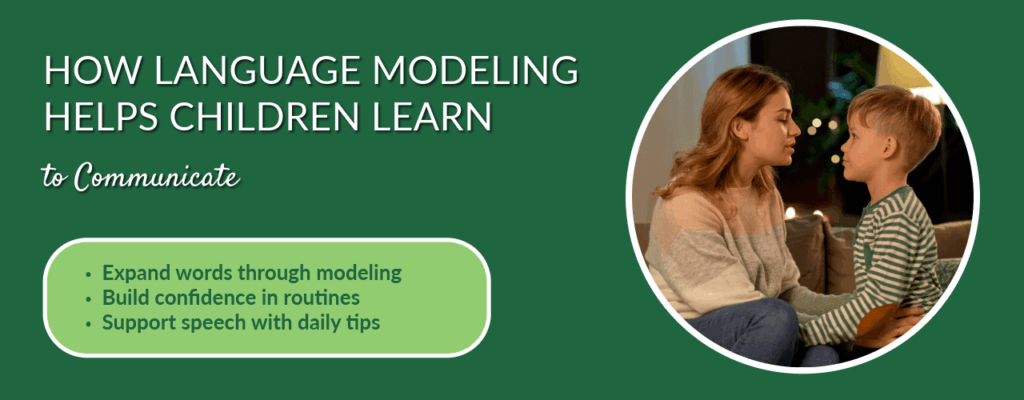
Hearing how others talk provides an essential roadmap for children’s speech and language development–a practice called language modeling. At Flourishing Lives, our speech-language pathologists use this therapeutic technique to show children how words work in real time, and we encourage caregivers to do the same! By listening, observing, and practicing, children begin to internalize patterns that help them share their own thoughts.
Understanding the Core of Language Modeling
Language modeling is a process in which adults intentionally use words and phrases to help children connect meaning with communication. Rather than focusing only on correction, the adult provides a steady stream of clear, simple, and meaningful speech.
For example:
- If a child points to a ball and says “ba,” the adult might respond, “Yes, that is a red ball.”
- If a child says, “kitty soft,” the adult can expand with, “The kitty is very soft.”
- If a child is quiet but reaching for a toy, the adult can model, “You want the car.”
This approach shows the child the “next step” in language without pressure. They hear a more complete version of their thought, which helps them practice new words and sentence structures naturally.
Why This Approach Builds Strong Communication Skills
Children thrive when they are immersed in rich, meaningful language. Language modeling provides this in a way that is supportive and encouraging. Some benefits include:
Expands Vocabulary
- Children learn new words by hearing them used naturally in context.
Improves Sentence Structure
- Modeling helps kids move from single words to phrases, then to complete sentences.
Boosts Comprehension
- Listening to modeled language helps children understand grammar, word order, and meaning.
Supports Confidence
- Because the child is not corrected harshly, they feel safe to try new words without fear of failure.
Why Does Language Modeling Work?
Research in child development consistently shows that children learn communication skills by interacting with others. Modeling supports this by:
Offering Repetition in Natural Settings
- Children need to hear words many times before using them.
Encouraging Interaction
- The modeled response keeps the conversation going, even if the child only says one word.
Building Real-world Connections
- Language is tied to what the child sees, hears, and does, making it more meaningful.
In short, this approach mirrors how children’s brains are wired to learn: through social connection, repeated exposure, gentle guidance, and practice in context.
Practical Examples in Everyday Life
We encourage families to weave language modeling into daily routines. Here are some simple opportunities:
Mealtime
- If your child says “juice,” you can say, “You want more apple juice.”
Playtime
- When your child holds a block and says “tower,” you can model, “You are building a tall tower.”
Outdoors
- If your child points at a bird, you can say, “That bird is flying high in the sky.”
Bedtime
- When your child says “book,” you can respond, “You want to read the bedtime book.”
Discovering the Best Communication Support for Your Child
The power of language modeling lies in its simplicity. Children are not pressured to perform. Instead, they are invited into conversations that reflect their interests, emotions, and discoveries. Over time, this steady support helps them grow into confident communicators who can share their ideas clearly.
Many families find this approach to be both encouraging and effective. Every child’s journey is unique, and having guidance from a professional can help tailor strategies to your family’s needs.
At Flourishing Lives, we believe in empowering children and families with practical tools and supportive care. Together, we can help your child find their voice and flourish in communication.
Schedule an appointment at our St Clair Shores, MI clinic today to get started.