
Everyday Sensory Strategies Used in Occupational Therapy
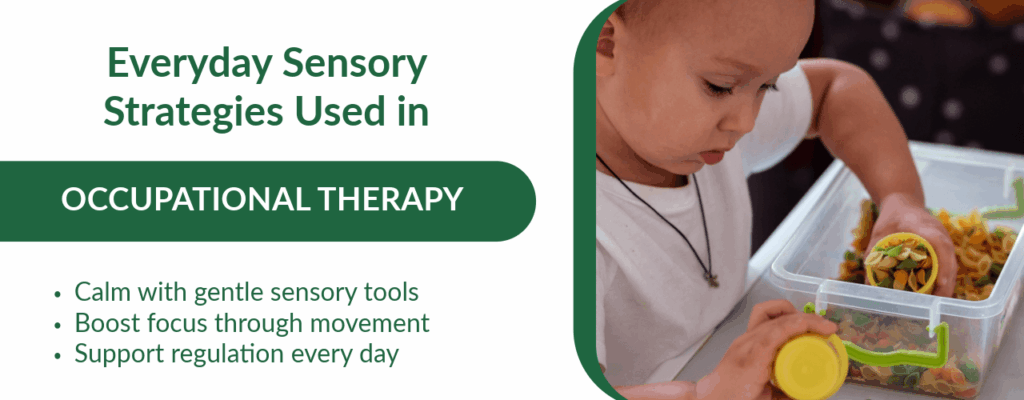
Every child experiences the world through their senses, but sometimes those experiences feel overwhelming or under-stimulating. That is where occupational therapy at Flourishing Lives can help. Our OTs often use sensory strategies to support children in finding calm, focus, and confidence in their daily routines.
Even better? These tools are practical, effective, and easy for families to carry into home and school life. Let’s take a closer look!
If Your Child is Overly Sensitive to Sensory Input
Some children are more sensitive to sights, sounds, textures, or movement, which means their nervous systems register everyday experiences as overwhelming. For example, a sound that feels normal to most people might seem painfully loud, or a clothing tag may feel unbearable against the skin.
When these reactions build up, children can become anxious, irritable, or withdrawn, making calming strategies essential. They help reduce the intensity of sensory input, give the nervous system a chance to rest, and create an environment where a child feels safe and in control.
Creating Calm: Gentle Sensory Tools That Soothe
Soft Pressure Touch
- A gentle, consistent touch helps the body feel secure and can comfort your child when the world feels too loud or busy.
Dim Lighting Environments
- Lower light levels create a soothing space, as they reduce visual input and make it easier for children to relax and re-center.
Rhythmic Movement
- Slow, predictable movement patterns, like rocking or swaying, can help bring peace and signal to the nervous system that it is safe to rest.
Comfortable Spaces
- A cozy environment, like a quiet nook, provides a retreat. Create a safe spot in your home to help children regulate emotions during stressful moments.
Gentle Sounds
- Sound can shift mood, and soft music or calming tones can reduce anxiety and help children feel more grounded.
If Your Child is Under-Stimulated by Sensory Input
While some children are highly sensitive to sensory input, others may not register enough stimulation. These children may seem disengaged from their environment and often seek out intense sensory experiences, such as running, spinning, or bumping into walls.
Without the right strategies, kids who are under-stimulated by sensory input may find it harder to focus, learn, or participate in daily activities. Alerting strategies give the nervous system the boost it needs, helping children feel energized, engaged, and ready to take on challenges.
Boosting Energy: Everyday Alerting Sensory Strategies
Bright Lighting
- Increased light can improve attention. A well-lit space signals the brain to be more alert and engaged.
Upbeat Sounds
- Rhythmic, lively music provides energy and helps children transition from sluggishness to readiness for action.
Active Movement
- Quick, energetic movement wakes up the body. Activities like swinging or animal walks spark attention and prepare children for daily tasks.
Strong Smells or Flavors
- Certain scents or tastes can perk up the senses, providing a burst of stimulation that supports focus.
Varied Textures
- Exploring new textures can be stimulating and help keep children curious and attentive.
Why Sensory Approaches Matter Every Day
Sensory strategies are not just tools for the clinic. They empower children and families to navigate routines with confidence. Whether calming or alerting, these approaches give children choices, helping them feel in control of their emotions and actions.
Take the Next Step Toward Sensory Support
It’s common for children to struggle with regulation, focus, or emotional balance. Fortunately, you can weave these everyday sensory strategies into your daily routines with the guidance of a skilled therapist. Contact Flourishing Lives today to learn how our team can help your family discover the power of sensory support.